Therapy practice management software enables therapists, psychologists, counselors, and mental health clinics to manage scheduling, client records, SOAP notes, billing, telehealth, intake forms, and compliance all in one platform.
Here we’ve compared the best therapy practice management software, including SimplePractice, TherapyNotes, Upheal, Jane App, TheraNest, TheraPlatform, Sessions Health, Bloom, Zanda Health, and Therasoft.
We’ve outlined their features, pricing, strengths, limitations, and the practices they’re best suited for. Whether you’re a solo therapist, group practice or multidisciplinary clinic, this resource will help you select the right software for your workflow, reduce administrative burden and improve patient care.
This guide breaks down the best options for mental health therapists, physiotherapists, counsellors, occupational therapists, and psychologists so you pick the one that actually fits how you work.
Top 10 Therapy Practice Management Software
1. SimplePractice

SimplePractice is the market leader. Over 250,000 practitioners trust it, and for good reason. It covers everything: scheduling, billing, HIPAA-compliant telehealth, insurance claims, a client portal, and a mobile app for iOS and Android.
The user experience is clean and well-thought-out. For practices with complex insurance billing needs, it remains one of the most capable options available.
The caveat: it's now the most expensive base platform in its category after a recent price increase, and the AI note feature ($35/month add-on) only works with SimplePractice's own telehealth system.
Best for: Established practices with complex insurance billing and larger teams.
2. TherapyNotes
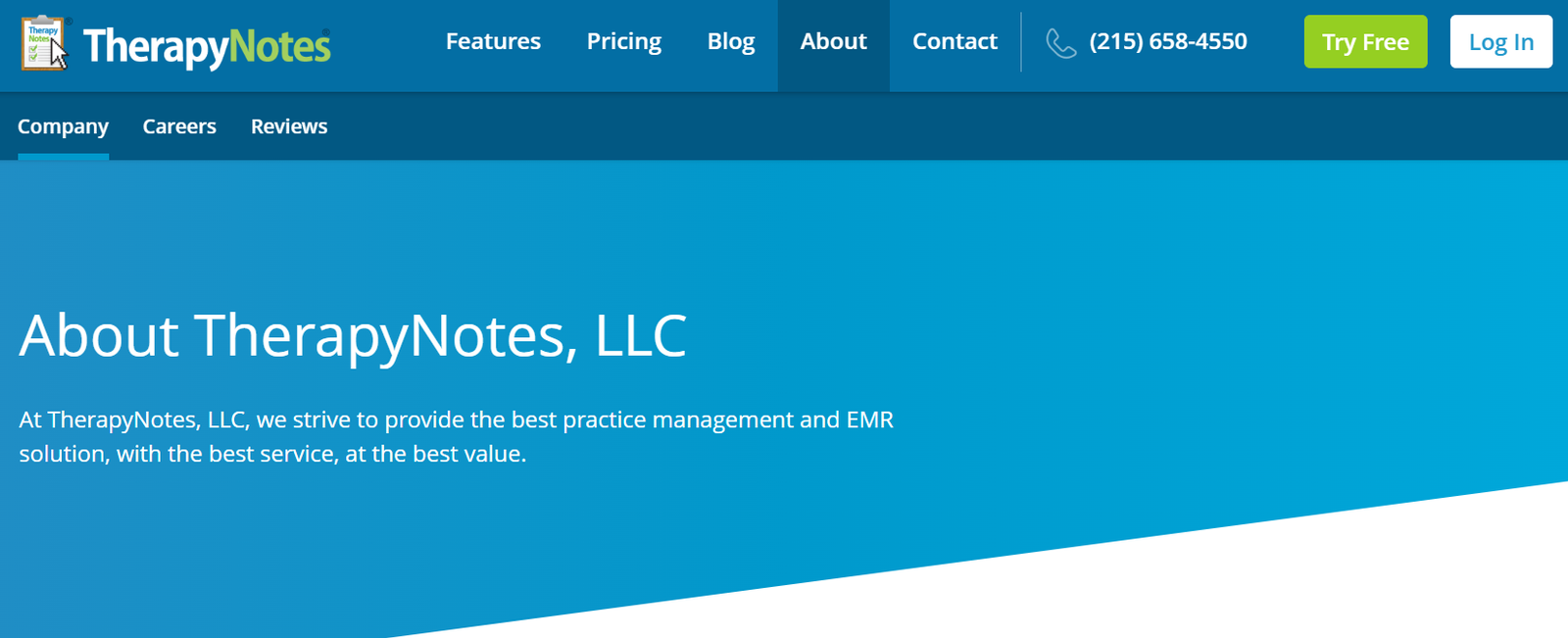
TherapyNotes was built specifically for behavioural health, and it shows. The billing and claims processing is rock solid. It's the go-to choice for practices where insurance workflows are the top priority.
The AI add-on (TherapyFuel, $40/month per clinician) generates both notes and treatment plans, and works with both live telehealth and in-person sessions. The interface feels dated compared to newer platforms but if billing reliability matters most, TherapyNotes delivers.
Best for: Insurance-focused group practices that need dependable claims management.
3. Upheal
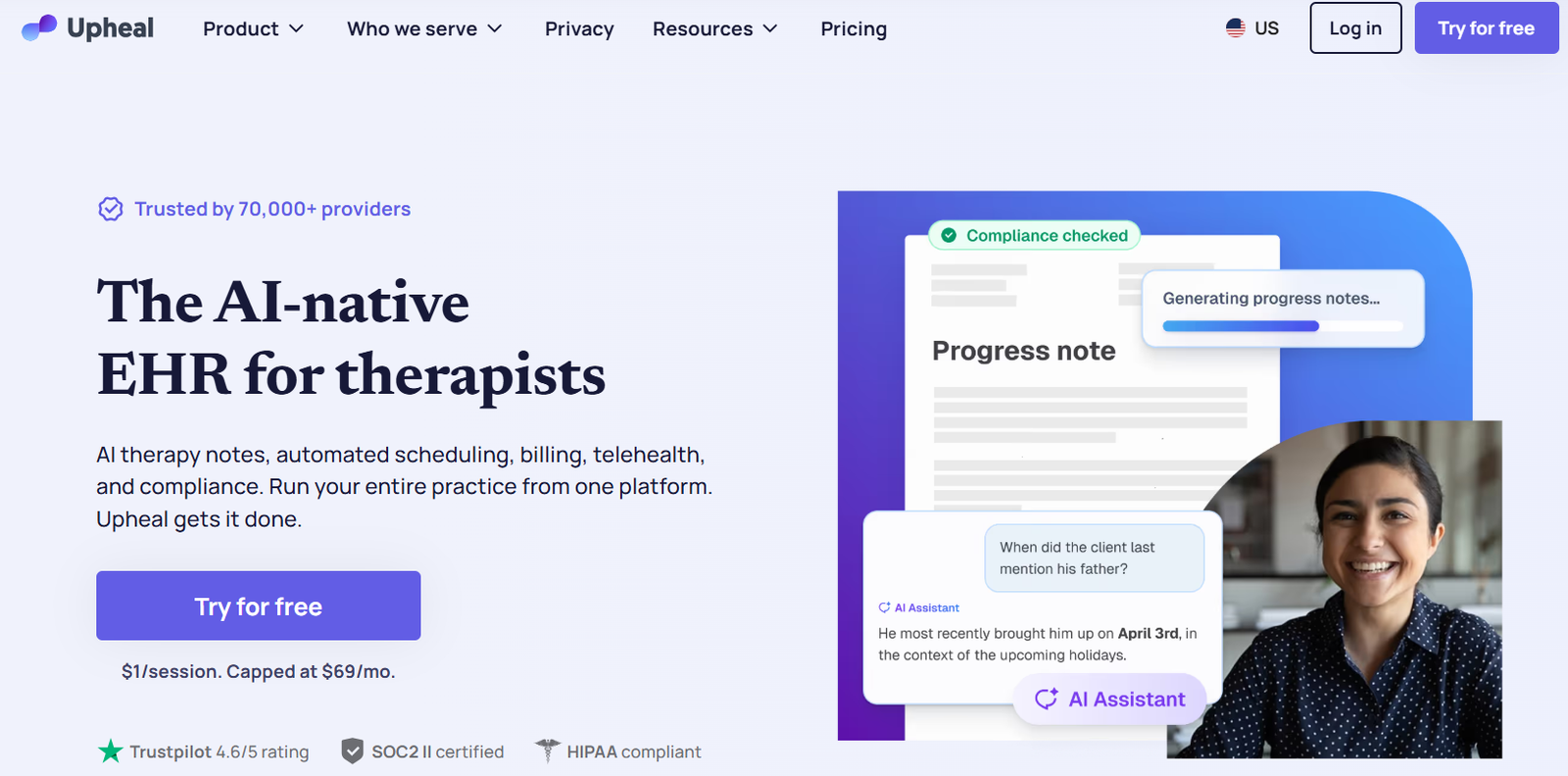
Upheal is the AI-native option on this list. Unlike platforms that bolt AI onto an existing system, Upheal was built around AI from day one notes, treatment plans, compliance checks, scheduling, and payments all work together seamlessly.
The platform serves over 70,000 mental health clinicians. AI note-taking works across telehealth, in-person sessions via audio recording, and even through a browser extension for any video platform. Pricing is transparent: $1 per session, capped at $69/month with everything included. No hidden add-ons.
Best for: Private-pay or hybrid practices that want to automate as much admin as possible.
4. Jane App
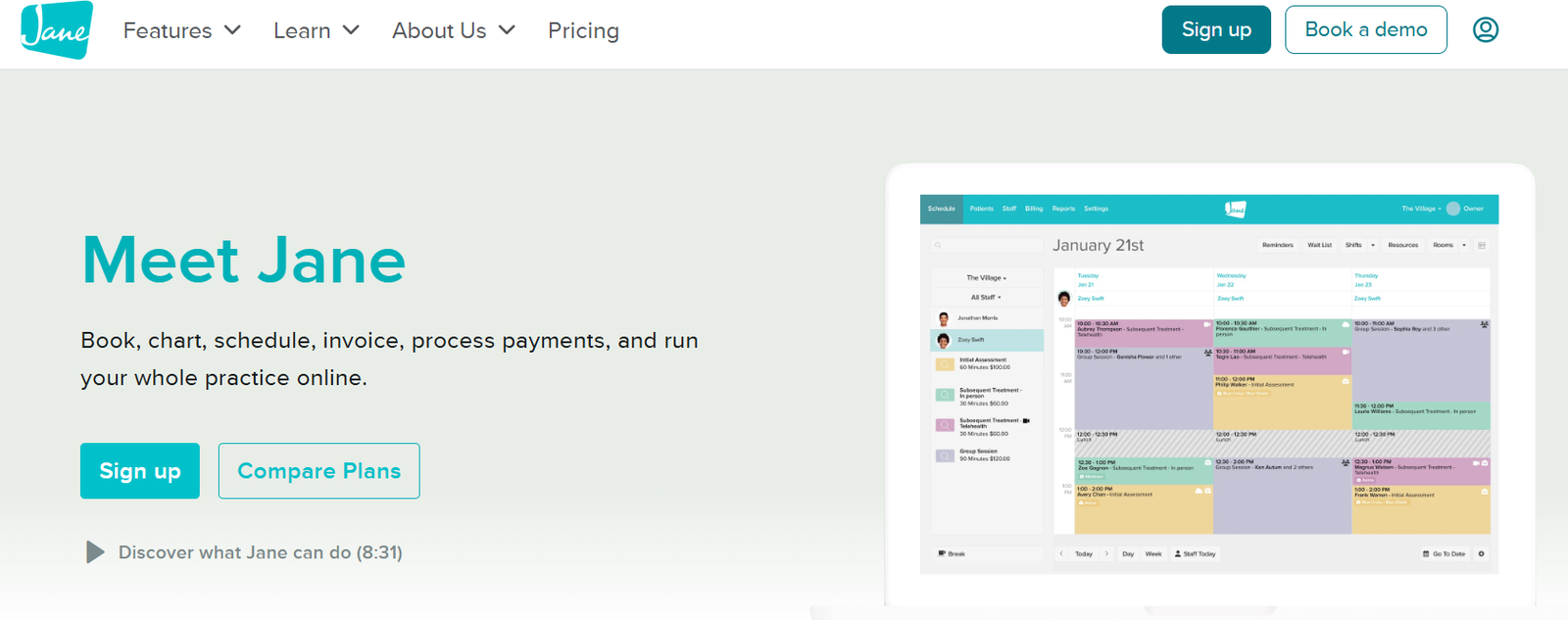
Jane App stands out for its beautiful design and powerful scheduling. Originally built for physiotherapy, massage therapy, and allied health, it now serves mental health professionals too.
The AI Scribe add-on is the most affordable in this comparison at $15/month per practitioner. It works across session types and uploaded audio. The limitation: Jane was not purpose-built for mental health, so complex behavioural health documentation workflows may hit a ceiling.
Best for: Multidisciplinary clinics serving both physical and mental health specialities.
5. TheraNest
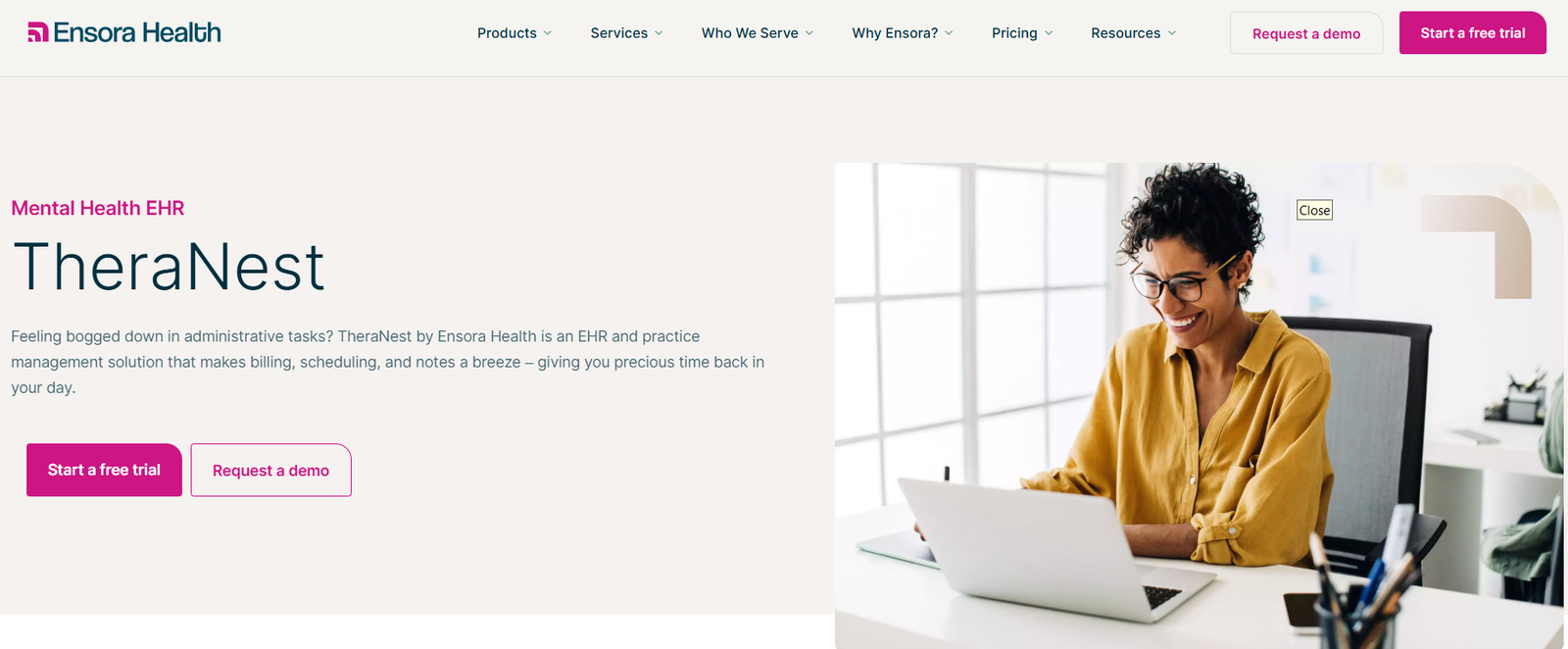
TheraNest is a solid, affordable all-in-one option for mental health providers. It covers the essentials scheduling, billing, notes, client portal, and telehealth without the enterprise price tag.
It's particularly well-suited for therapists just building their practice who need the fundamentals in one place without overpaying. The caveat: users report occasional technical glitches, and the platform lacks the advanced AI capabilities of newer competitors.
Best for: Solo therapists and small practices wanting essentials at an accessible price.
6. TheraPlatform
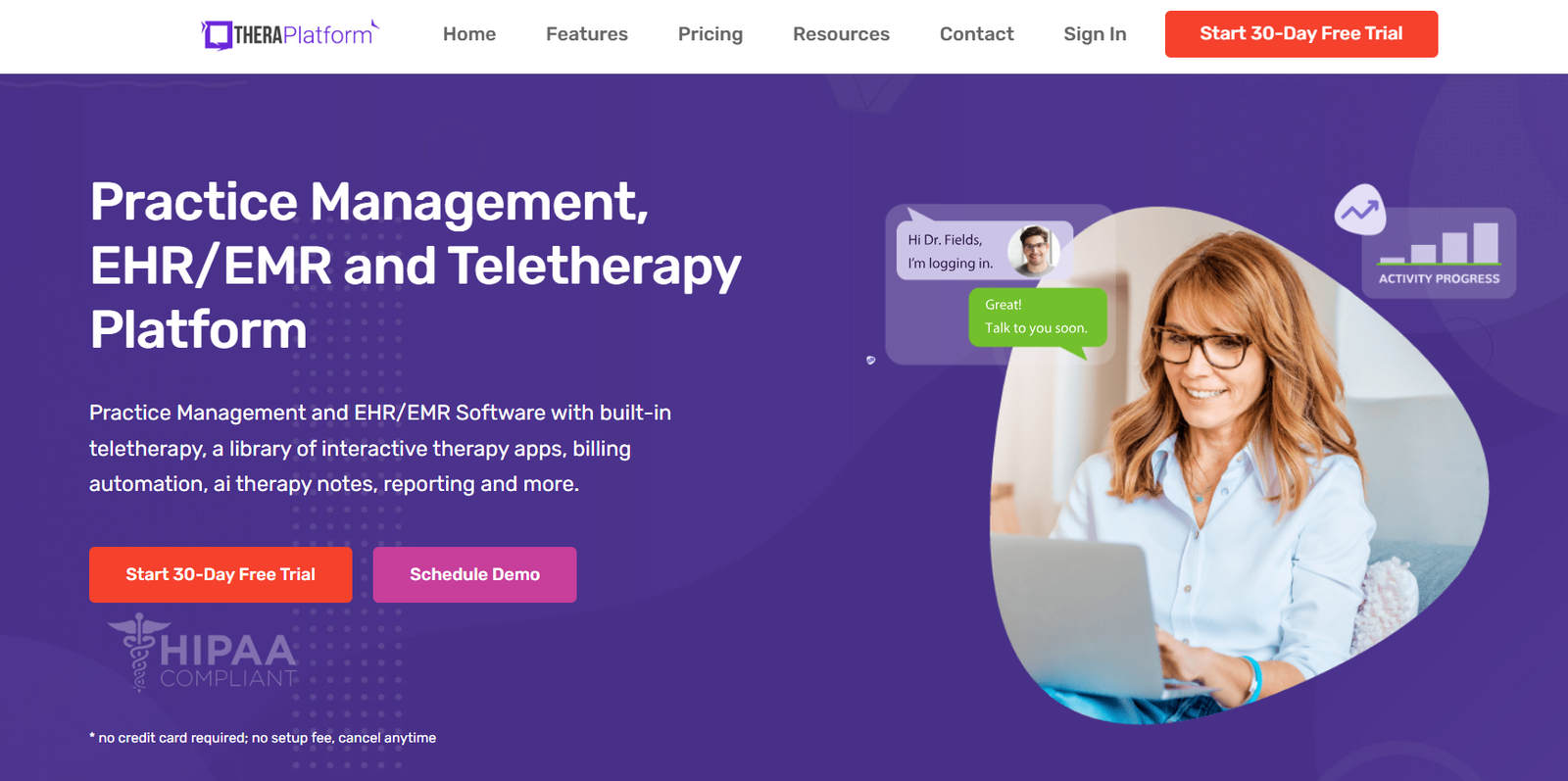
TheraPlatform is purpose-built for practices that rely heavily on virtual sessions. It combines secure telehealth with clinical documentation and patient engagement tools in one system at one of the lowest price points on this list.
For occupational therapy practice management or any speciality with a strong virtual care component, TheraPlatform is worth a serious look.
Best for: Therapists running telehealth-heavy or hybrid practices.
7. Sessions Health

Sessions Health was designed by therapists and intentionally keeps things simple. There's no AI documentation a deliberate choice for practitioners who prefer to write their own notes.
The free plan for up to 3 active clients makes it one of the best entry points for therapists just starting out.
Best for: New or part-time therapists wanting a clean, affordable starting point.
8. Bloom Best for UK Therapists
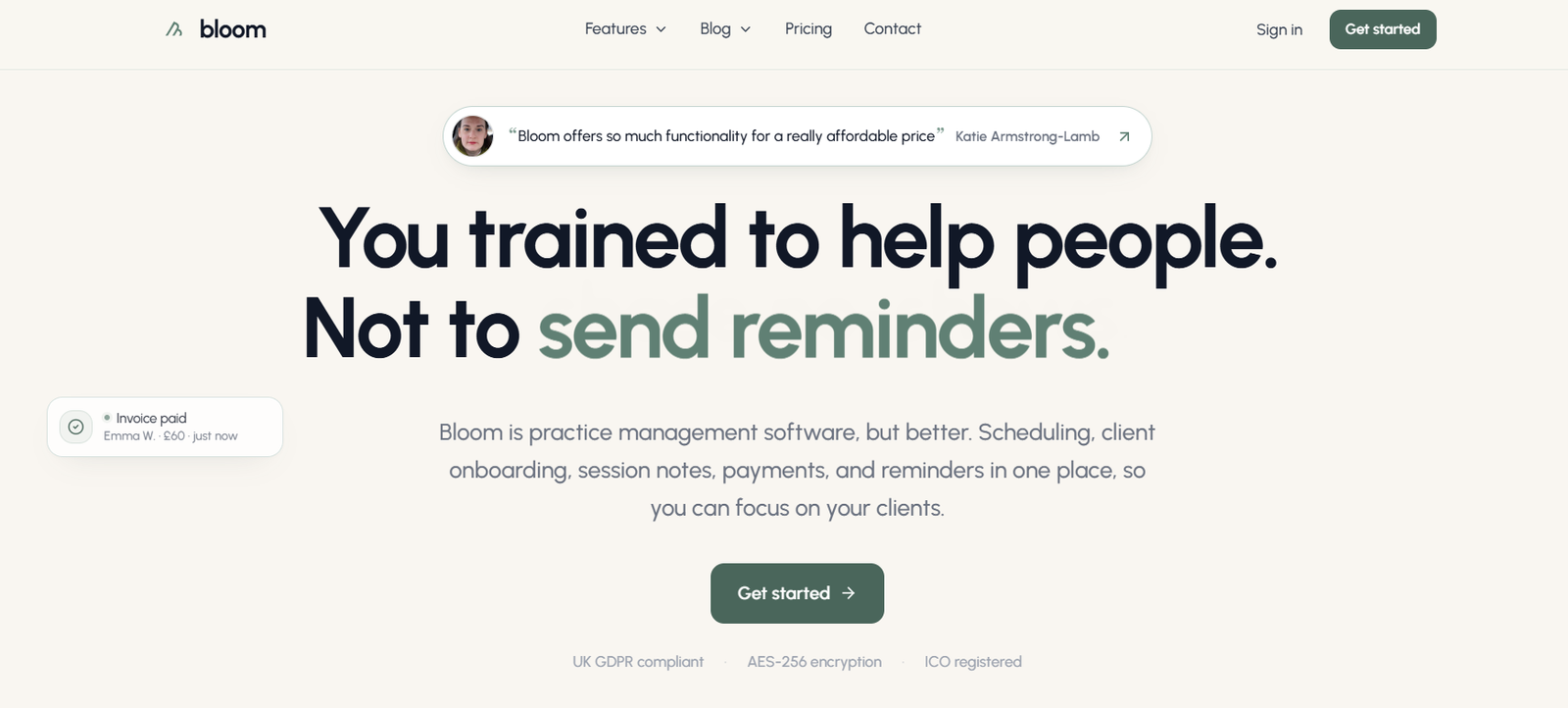
Most platforms on this list are built around American healthcare systems HIPAA compliance, CPT codes, USD pricing. For UK therapists and counsellors, that means paying for features designed for a completely different system.
Bloom is built specifically for UK therapists and counsellors. It covers scheduling, client records, payment tracking, and appointment reminders at an affordable price point that makes sense for UK private practice. For UK practitioners, pairing Bloom with a strong healthcare marketing strategy gives you both operational efficiency and client acquisition working together.
Best for: UK-based therapists, counsellors, and psychologists in private practice.
9. Zanda Health
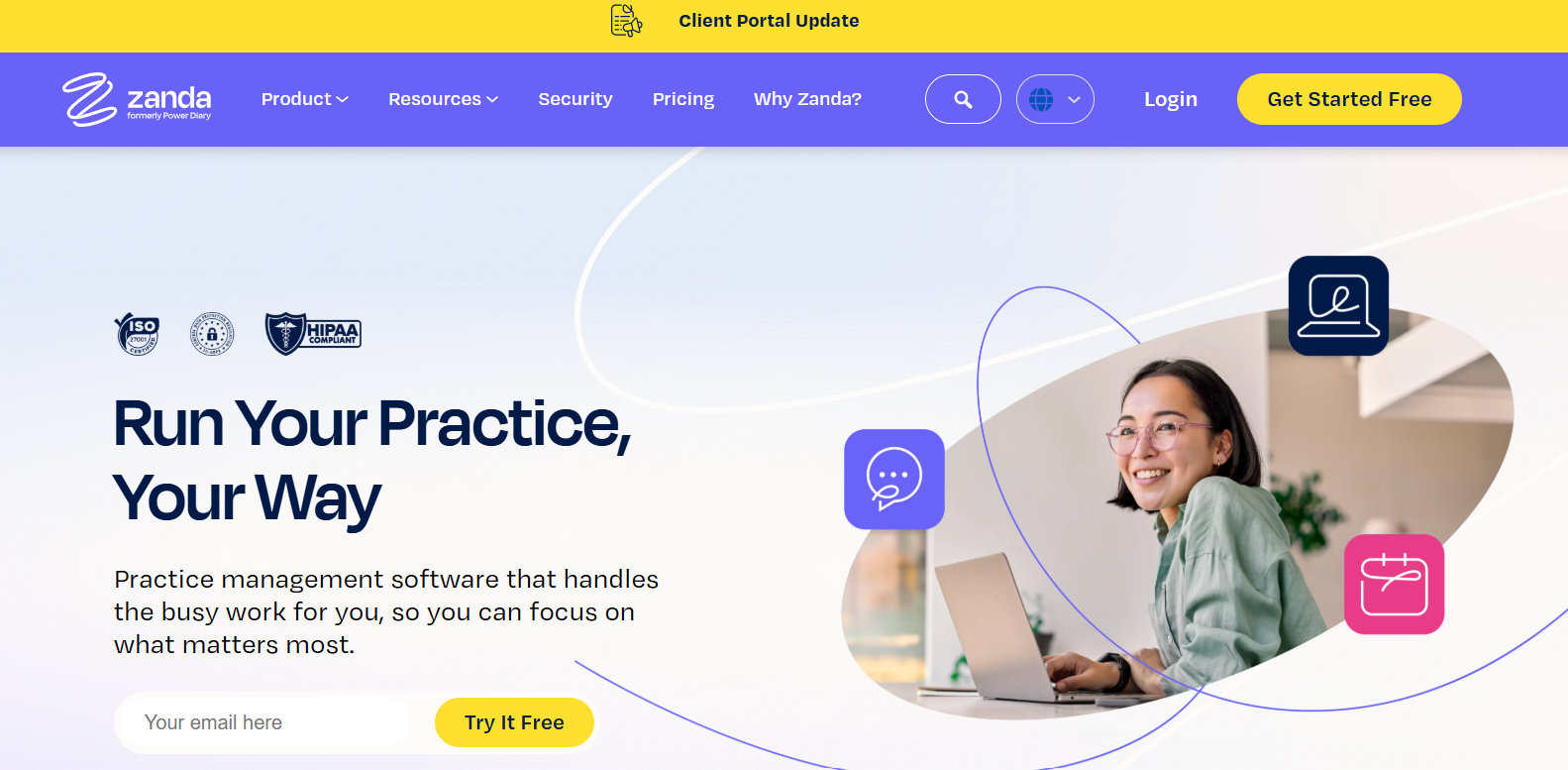
Zanda (formerly Power Diary) is a solid psychologist practice management software option, particularly for allied health settings. It includes calendar management, automated reminders (SMS and email), telehealth via Zoom integration, client management, and billing.
Best for: Psychologists, allied health practitioners, and multidisciplinary teams.
10. Therasoft
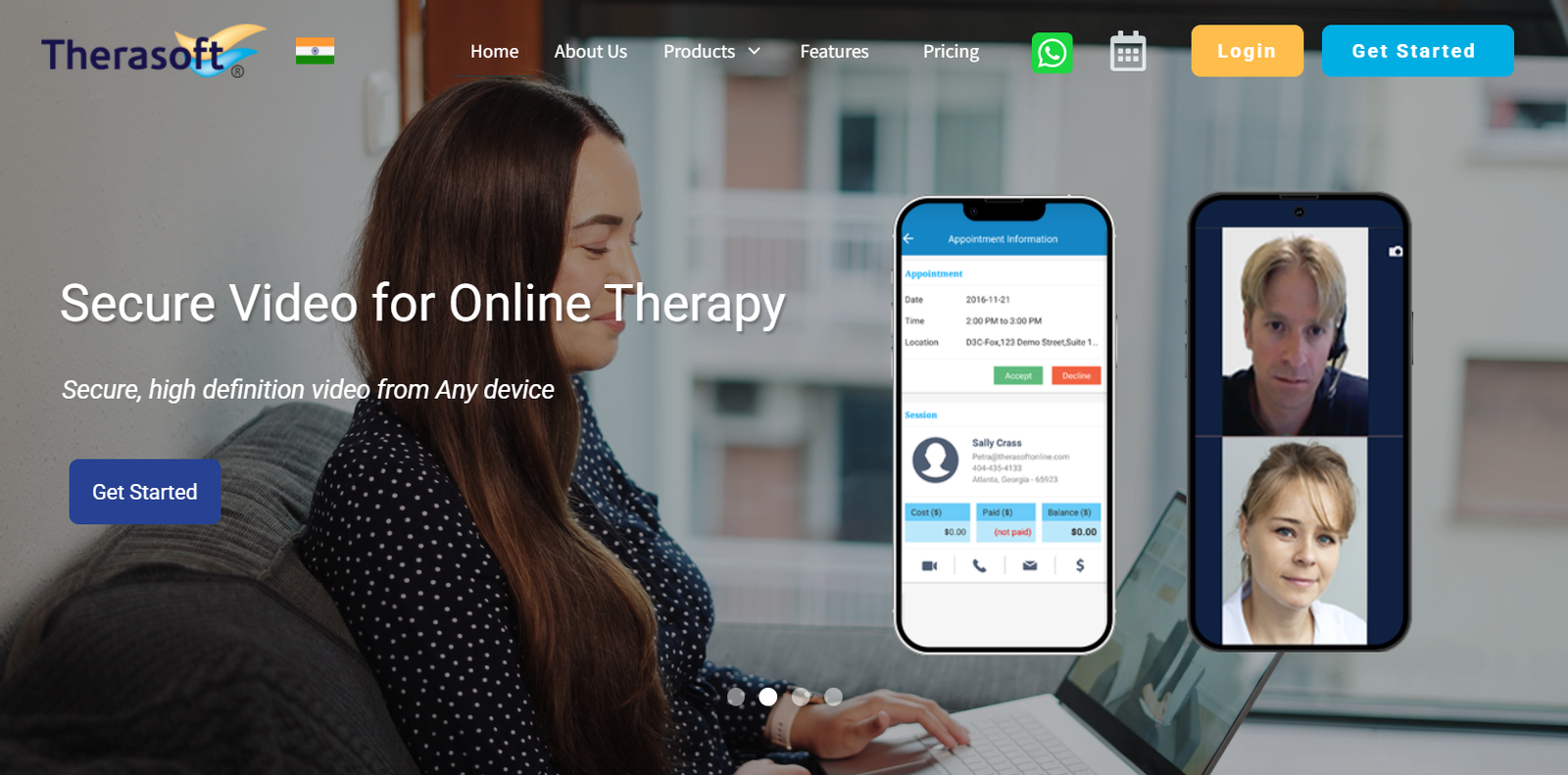
Therasoft is a HIPAA-compliant platform built specifically for therapists, social workers, and mental health professionals. Its strengths are in billing with one-click and batch insurance claim filing and a full library of online assessments, treatment plans, and progress note templates.
Best for: Therapists with high insurance billing volume who want deep, built-in clinical documentation tools.
What Is Therapy Practice Management Software?
Therapy practice management software is a digital platform that handles the operational and clinical side of running a therapy practice in one place.
That means scheduling, client records, session notes, billing, telehealth, intake forms, and compliance all in a single system instead of scattered across spreadsheets, email, and three different apps.
The best platforms go further. They add AI-powered documentation, automated reminders, compliance checking, and client portals that reduce the admin burden to almost nothing.
The goal? You spend more time doing therapy. Less time running a business.
Alos Read: How to Sell Health Products Online →Best Software by Therapy Type
Which platform fits your speciality? Here's a quick breakdown.
| Therapy Type | Top Recommendation | Runner-Up |
|---|---|---|
| Mental Health / Counselling | SimplePractice or Upheal | TherapyNotes |
| Psychotherapy | Upheal or TherapyNotes | Sessions Health |
| Physiotherapy / Physical Therapy | Jane App or Noterro | TheraPlatform |
| Occupational Therapy | TheraPlatform or Jane App | Zanda Health |
| Psychology | Zanda Health or SimplePractice | Upheal |
| Life Coaching | Jane App or TheraNest | Sessions Health |
| UK Private Practice | Bloom | Jane App |
| Multidisciplinary Clinics | Jane App | SimplePractice |
Must-Have Features
Before comparing platforms, know what you actually need. These are the features that matter most.
HIPAA/GDPR Compliance
Non-negotiable. Every platform you consider must be compliant with data protection laws relevant to your region HIPAA in the US, GDPR in the UK and Europe. Look for BAAs (Business Associate Agreements), encrypted storage, and audit trails.
Scheduling & Automated Reminders
A smart calendar is the heartbeat of your practice. Look for online self-booking, recurring appointment setup, two-way calendar sync, and automated SMS/email reminders to cut no-shows before they happen.
EHR & Clinical Documentation
Your electronic health records system needs customisable templates that match your therapeutic approach whether that's CBT, EMDR, SOAP notes, or person-centred therapy. The best psychotherapy practice management software lets you build documentation around how you actually work, not the other way around.
Billing & Insurance Management
Integrated billing saves hours every week. Look for one-click insurance claims, payment processing, automated invoicing, and clear reporting. If you're insurance-heavy, this feature alone should drive your decision.
Telehealth
Virtual sessions are now a standard part of practice, not an add-on. Built-in, HIPAA-compliant video calling without sending clients to a third-party link is a must.
Client Portal
Clients should be able to book, complete intake forms, access documents, and message you securely all without picking up the phone. A strong client portal reduces your admin burden and improves the client experience.
AI Documentation Tools
This is the biggest shift in 2026. AI-powered note-taking where software transcribes and structures your session notes automatically is now standard on leading platforms. It cuts average note time from 25+ minutes to under 5 minutes per session.
Why the Wrong Software Costs You More Than Money
Here's the thing: a bad platform doesn't just frustrate you. It actively hurts your practice.
Missed reminders mean no-shows. No-shows mean lost revenue. Poor billing integration means delayed or rejected insurance claims. Clunky documentation means notes pile up after hours straight into burnout territory.
How to Choose the Right Platform (Step-by-Step)
Ready to decide? Follow this framework.
Define your practice type and size
- Solo practitioner? Small group? Multidisciplinary clinic?
- Larger practices need team management features
- Solo practitioners often need simplicity above everything else
Clarify your insurance situation
- Insurance-heavy? Billing capability is your primary filter
- TherapyNotes and SimplePractice lead here
- Private-pay practices have more flexibility Upheal becomes more attractive
Identify your location
- UK therapists should prioritise GDPR-compliant, UK-focused platforms like Bloom
- US therapists need HIPAA compliance and ideally HITRUST certification
Decide on AI documentation
- Do you want AI to write your notes or do you prefer to write them yourself?
- This single decision narrows your options significantly
Run a free trial
- Most platforms offer a 30-day free trial
- Try your most common workflow: booking, session, note, invoice
- Real-world use reveals what a features list never will
Track admin hours saved
- After your first month, count the hours saved on admin
- That number tells you everything about whether it was the right choice
Common Mistakes to Avoid
Do This
- Calculate total admin hours cost before choosing on price alone
- Always verify HIPAA/GDPR compliance and request a BAA
- Use the free trial with your real daily workflows
- Prioritise GDPR-compliant UK platforms if you're a UK practitioner
- Treat software and digital marketing as a combined growth strategy
Avoid This
- Choosing the cheapest option without calculating lost admin hours
- Ignoring compliance requirements until they become a problem
- Testing a demo scenario instead of your actual day-to-day workflow
- Defaulting to US platforms as a UK-based therapist
- Treating practice management software as a standalone solution
Platform Comparison Table
| Platform | Best For | Starting Price | AI Notes | Telehealth | Free Trial | UK-Ready |
|---|---|---|---|---|---|---|
| SimplePractice | Solo to group | $49/mo | Add-on $35 | ✅ | 30 days | ⚠️ US |
| TherapyNotes | Insurance-heavy | $69/mo | Add-on $40 | $15 add-on | 30 days | ⚠️ US |
| Upheal | AI-native private pay | $1/session | ✅ Included | ✅ | 30 days | ⚠️ US |
| Jane App | Multidisciplinary | ~$54/mo | Add-on $15 | $15 add-on | Demo only | ⚠️ CAD |
| TheraNest | Budget solo | ~$39/mo | ❌ | ✅ | 21 days | ⚠️ US |
| TheraPlatform | Telehealth-first | $19.50/mo | ❌ | ✅ Core | 30 days | ⚠️ US |
| Sessions Health | Simple EHR | Free / $39 | ❌ | $10 add-on | Free plan | ⚠️ US |
| Bloom | UK private practice | ~£16/mo | ❌ | ✅ | Free trial | ✅ UK-built |
| Zanda Health | Allied health / psych | Contact | ❌ | ✅ Zoom | Free trial | ✅ GDPR |
| Therasoft | Insurance billing depth | Contact | ❌ | ✅ | 30 days | ⚠️ US |
Frequently Asked Questions
Your Next Step
The right therapy practice management software doesn't just organise your admin. It gives you back the time, headspace, and energy to do the work you trained for.
Start your free trial on the platform that best matches your practice type from the comparison table above. Use it for 2 weeks with your real workflows. Measure the time you save. Then decide.
And remember great software manages your practice. But it doesn't bring you clients.
For that, you need a strong online presence: a professional website, local SEO, and content that ranks when people search for therapists in your area. If you're ready to build that, our SEO services for healthcare providers are designed exactly for therapy practices like yours.
Get Started Book a Free Consultation We'll Help You Build a Digital Setup That Works →