In today’s digital healthcare landscape, nearly 80% of patients use online resources to research providers before booking an appointment. Many begin their journey through search engines, reviews, or AI-driven summaries, making credible and accessible online health information more critical than ever in 2026.
Also Read: Top Website Builders for Therapists
More than 70% of patients now research symptoms, providers, and treatment options online before booking an appointment
What Is Healthcare Content Marketing
Healthcare content marketing involves deliberately creating and distributing valuable, relevant, and medically accurate content to attract, engage, and retain patients. This must be done while strictly complying with regulations such as HIPAA and GDPR, avoiding unsubstantiated claims, and prioritizing trust at every step. This is not generic marketing. It is educational, empathetic, evidence-based content that positions your practice or organization as a reliable authority patients turn to first.
Also Read: Top therapy practice Management Software →Blog Objective
By the end of this guide, you will gain a complete set of actionable strategies, including proven foundational tactics and emerging approaches tailored specifically to healthcare. You will also master essential compliance practices to keep your content HIPAA- and GDPR-safe and regulation-proof.
Also Read: Online Directories for Therapists
Content Marketing Strategies For Healthcare Industry
1. Write Educational Blog Posts
As a healthcare provider, publishing educational blog posts should be your top priority. These are your most powerful tools for owning search rankings and building patient trust. Write articles that directly answer real patient questions using simple, clear language. Include credible sources, physician-reviewed disclaimers, and optimize every post for E-E-A-T and conversational search queries patients actually type into Google or voice assistants.
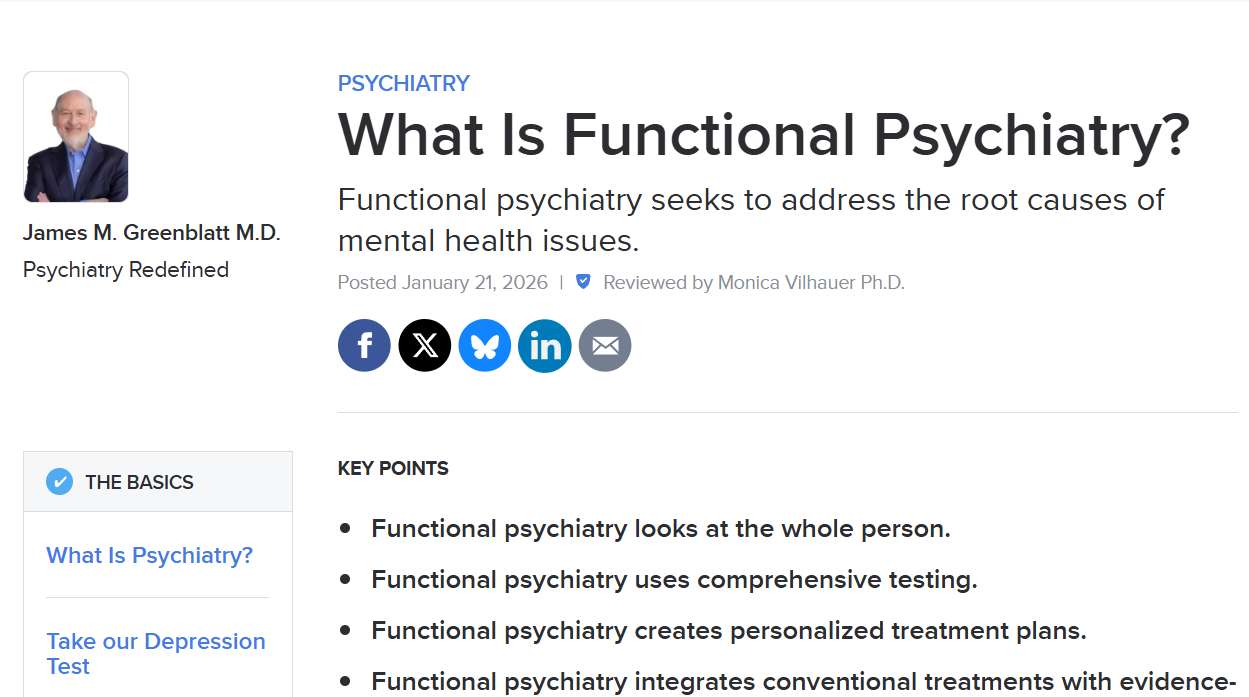
2. Publish Patient Success Stories
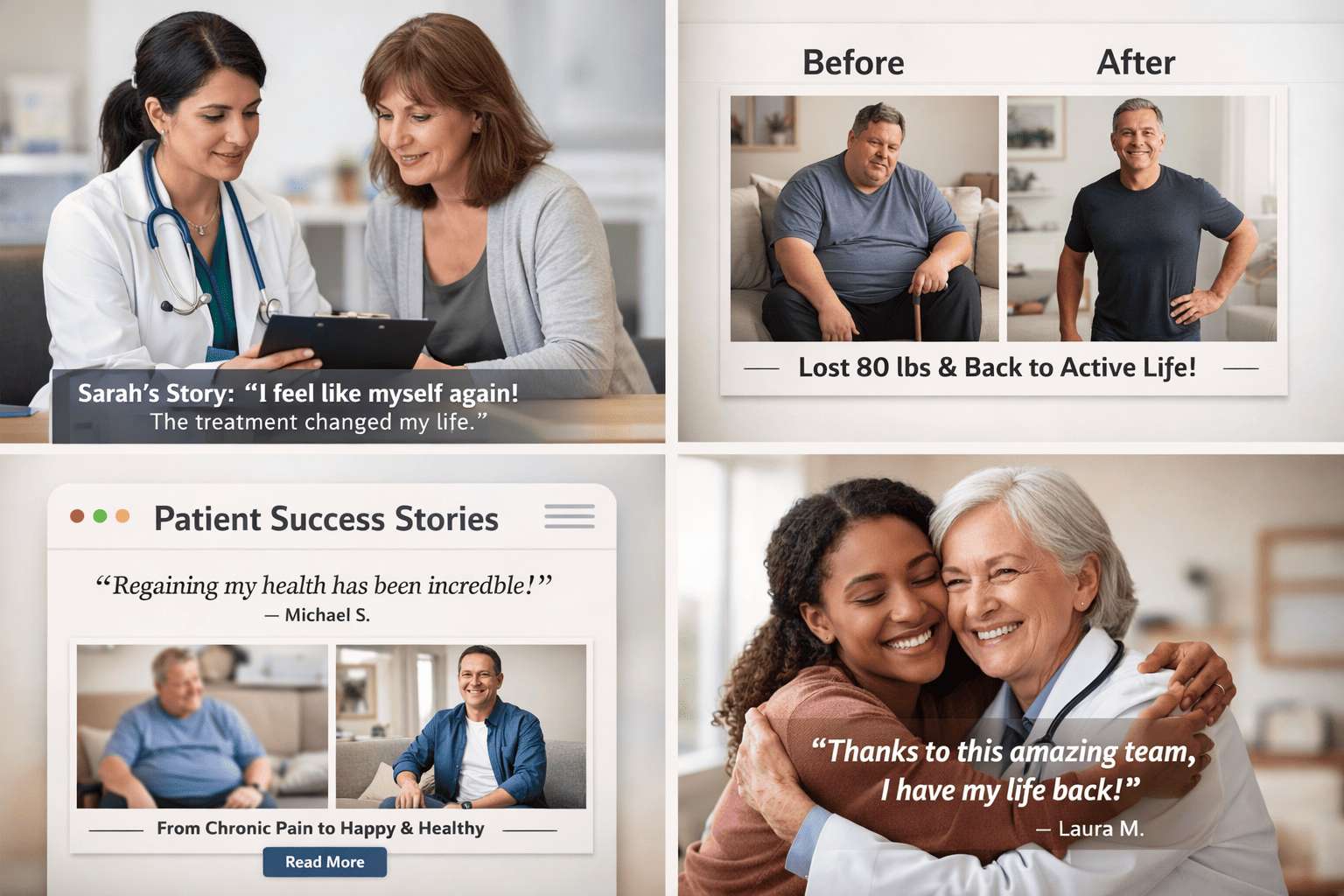
Collect and publish HIPAA-compliant patient success stories by obtaining written consent and anonymizing details where required. Turn real outcomes into clear, trustworthy narratives with before-and-after context and authentic quotes. Feature these stories on your homepage, service pages, and social platforms to build emotional proof and drive conversions.
3. Create Video Content
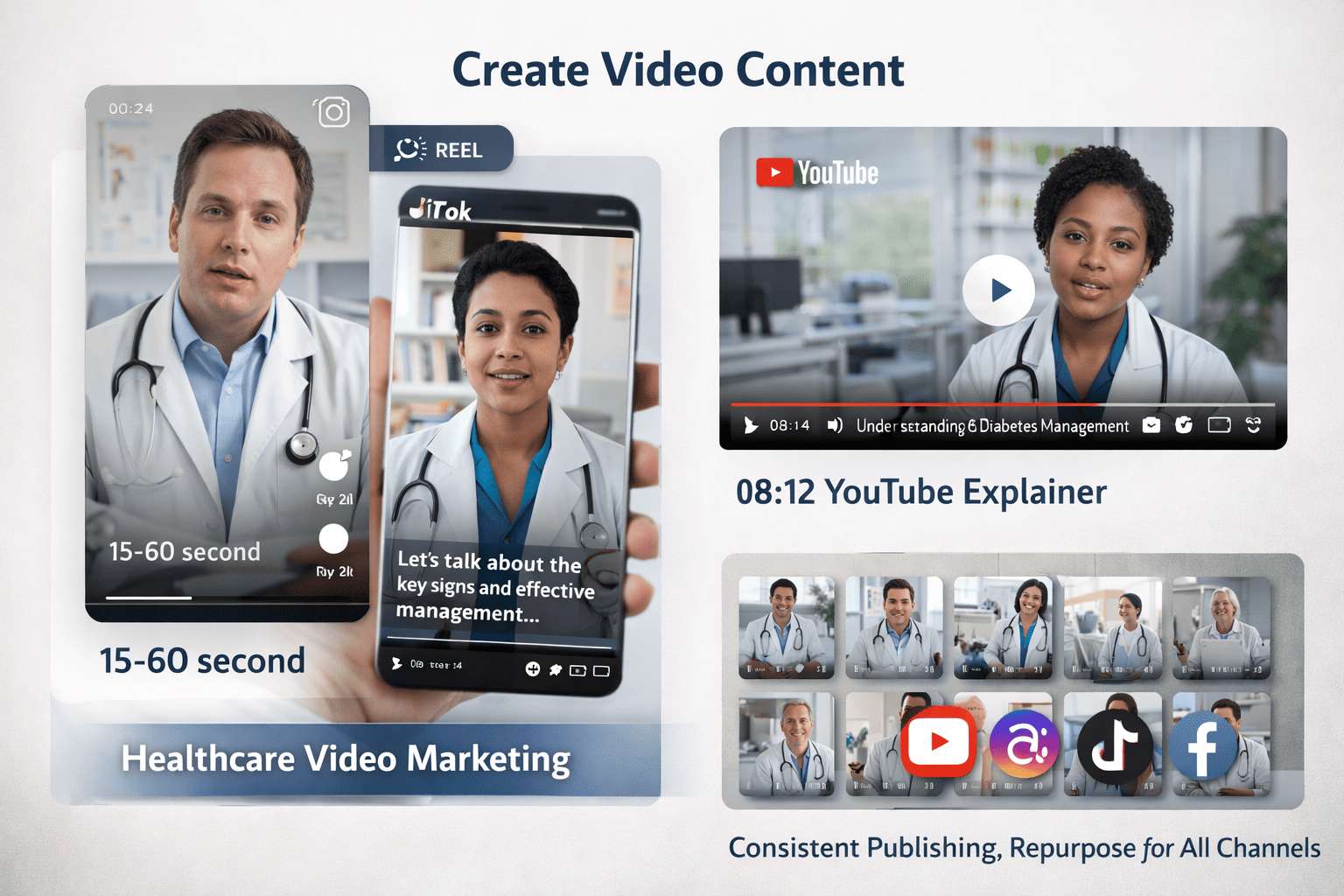
Launch healthcare video marketing by producing short 15–60 second Reels or TikTok videos and longer 3–8 minute YouTube explainers. Feature physicians speaking directly to camera about procedures, conditions, and daily practice life. Publish consistently, include captions, optimize titles for search, and repurpose videos across all channels.
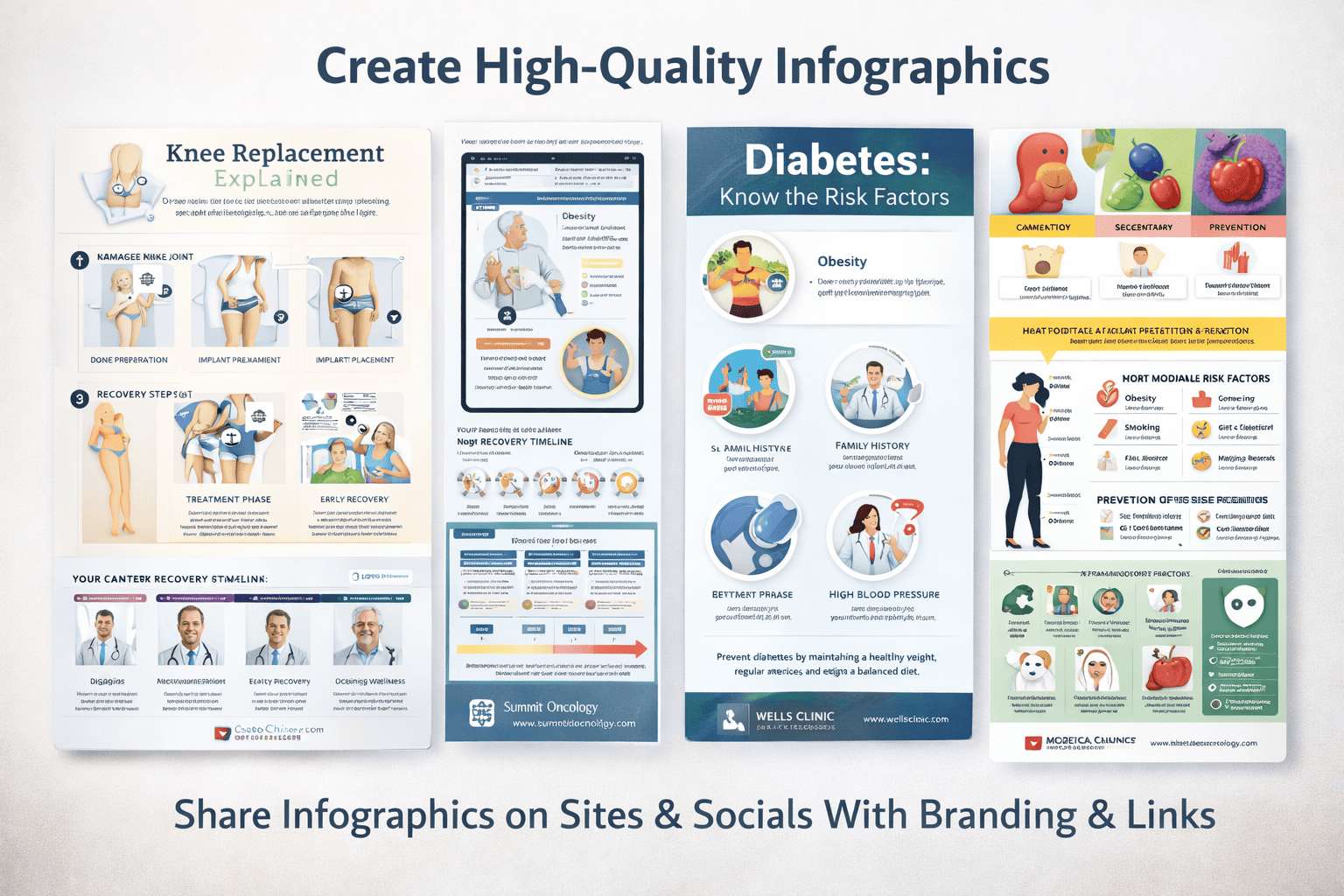
4. Create High-Quality Infographics
Design professional infographics for each major service to visually explain treatment processes, risk factors, recovery timelines, and prevention statistics. Use tools like Canva or professional designers. Embed them in blog posts, share them on social platforms, and include branding and source links to increase referral traffic.
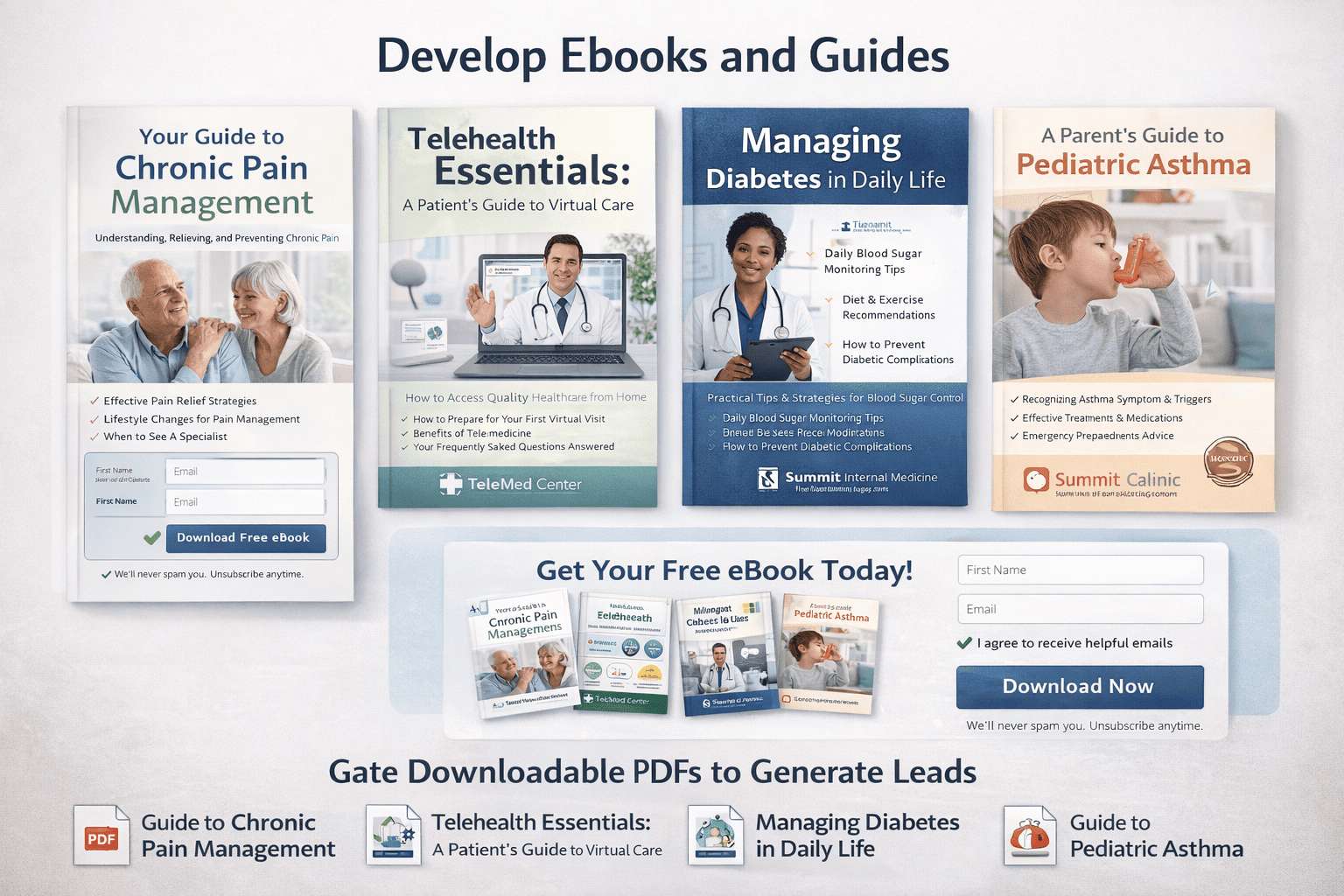
5. Develop Ebooks and Guides
Create and gate at least one comprehensive ebook or guide each quarter. These 20–40 page PDFs should focus on high-intent topics such as chronic pain management or telehealth education. Use them as lead magnets with simple opt-in forms to grow your email list and nurture prospects long-term.
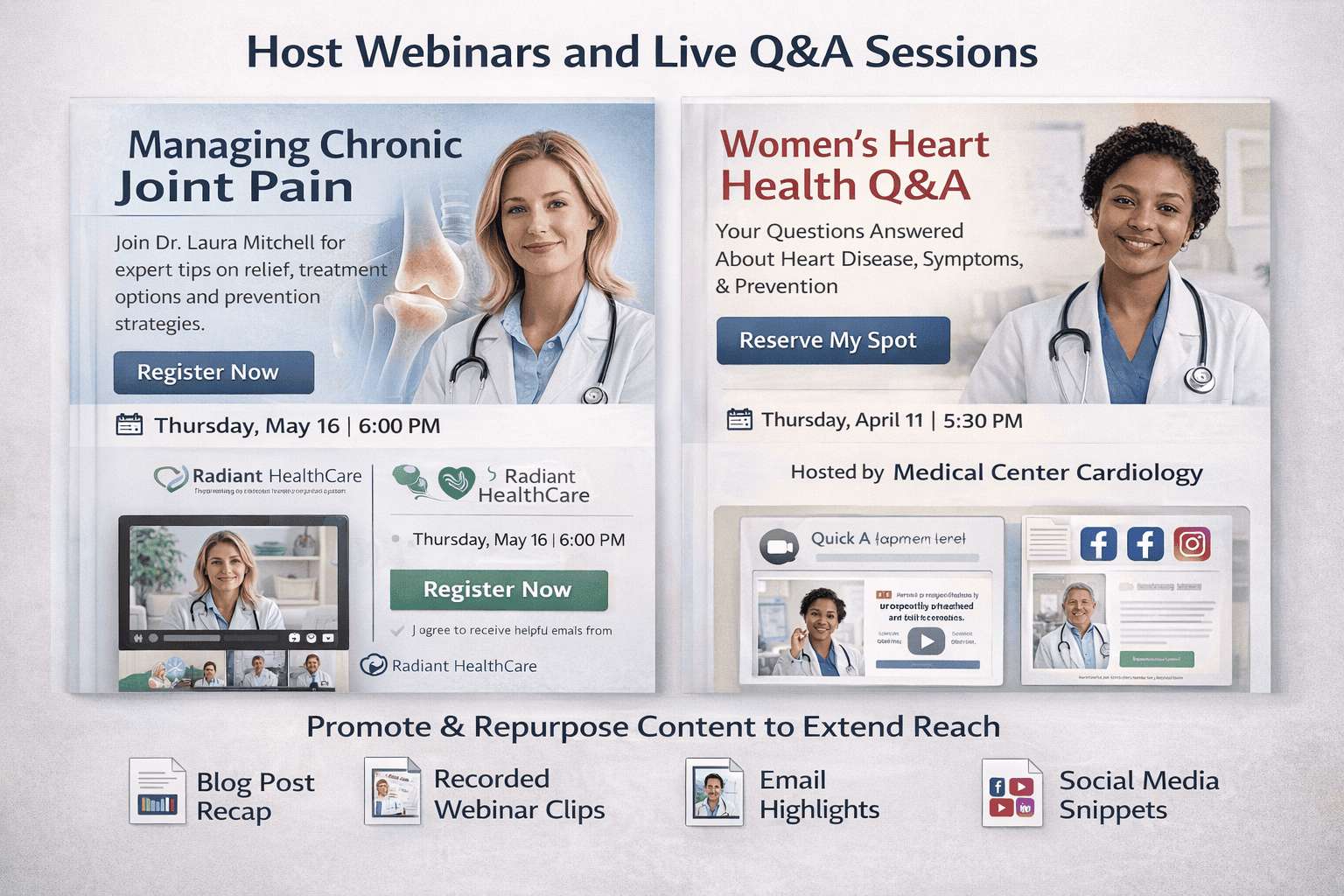
6. Host Webinars and Live Q&A Sessions
Schedule monthly live webinars and Q&A sessions on high-value healthcare topics. Promote each event three to four weeks in advance through email and social media. Record sessions and repurpose them into blog posts, video clips, and email content to extend reach and authority.
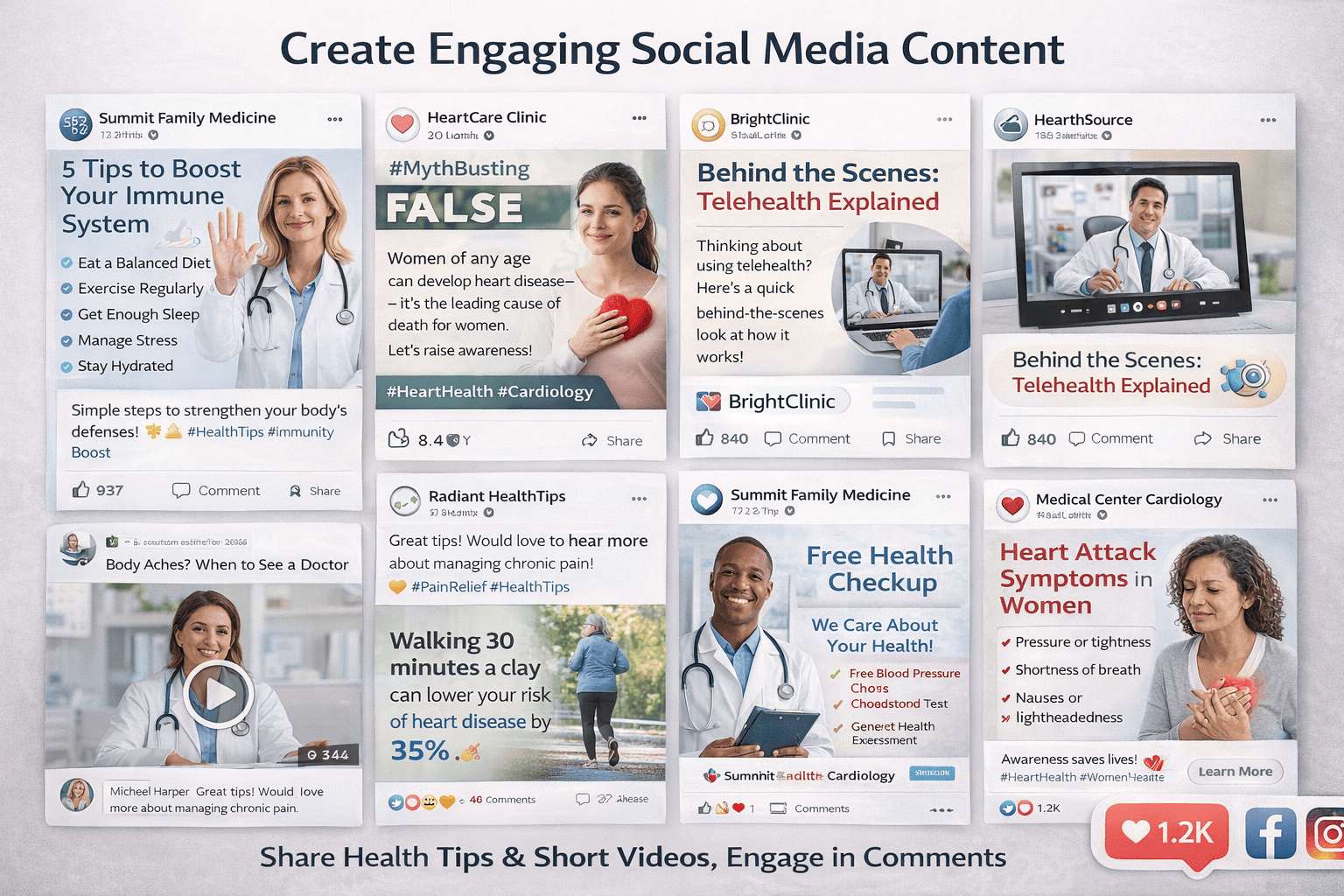
7. Create Engaging Social Media Content
Post daily value-driven social media content without exception. Share health tips, myth-busting posts, behind-the-scenes content, and short native videos. Maintain a 70/30 educational-to-promotional ratio and actively engage with comments to build trust and platform visibility.
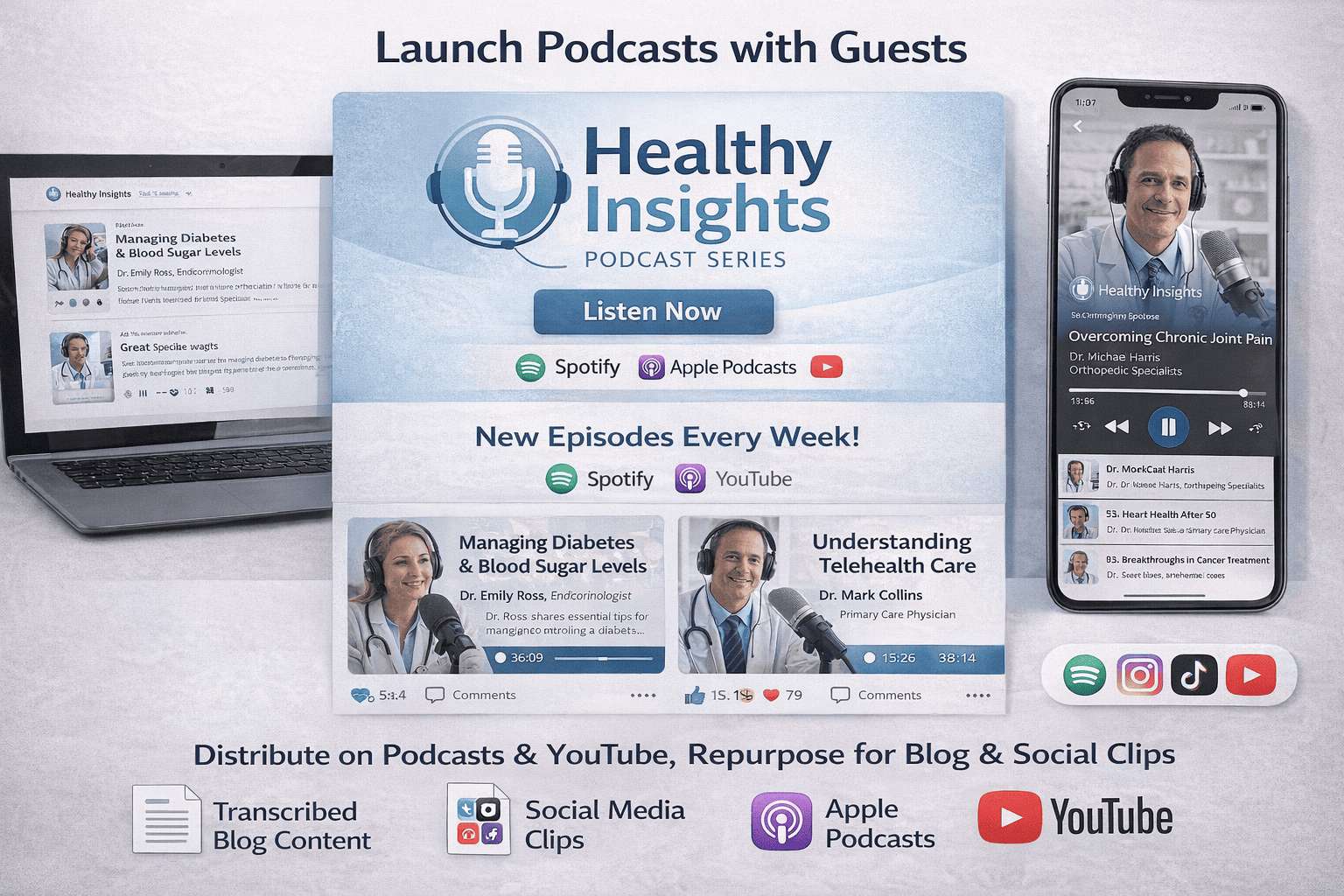
8. Launch Podcasts with Guests
Start a podcast series featuring 20–40 minute episodes with specialists, referring physicians, or recovered patients. Distribute episodes on Spotify, Apple Podcasts, and YouTube. Transcribe each episode for blog content and repurpose key soundbites for short-form social clips.
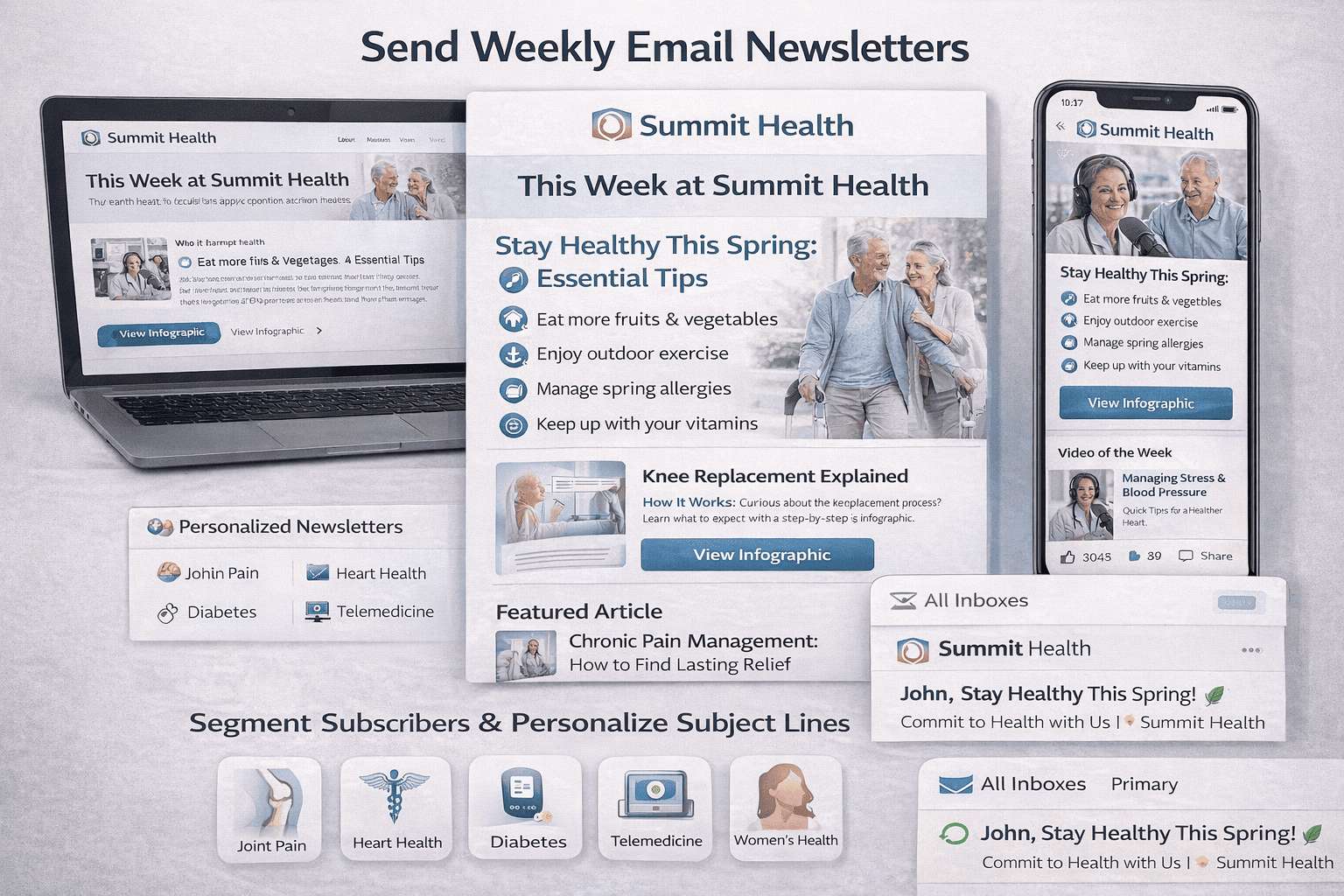
9. Send Weekly Email Newsletters
Commit to a consistent weekly email newsletter schedule. Share three to five high-value items such as health tips, practice updates, seasonal advice, or short videos. Segment subscribers by condition or service interest and personalize subject lines to improve engagement.
Also Read: Digital Marketing Strategies for Healthcare
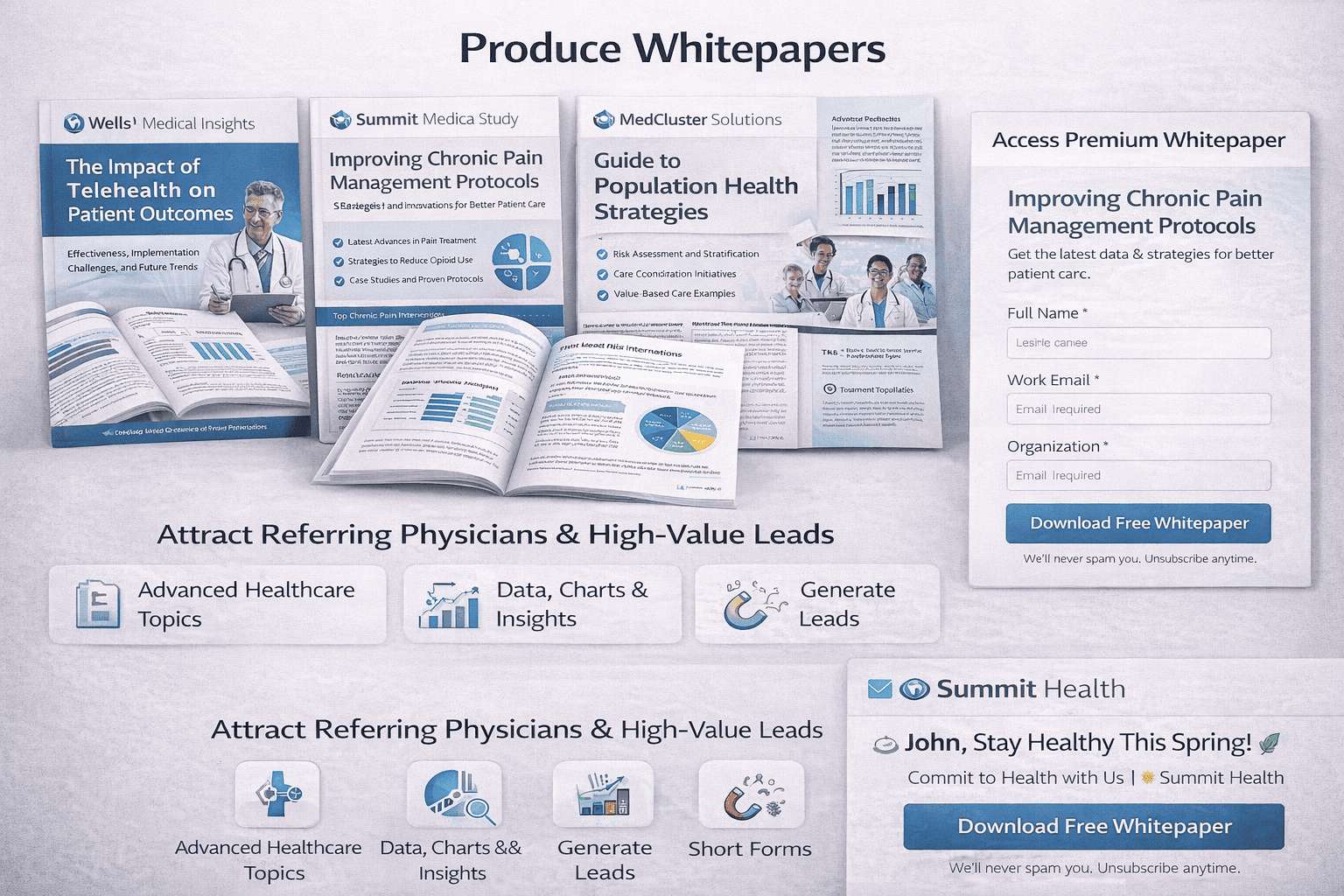
10. Produce Whitepapers
Develop whitepapers for B2B or complex clinical audiences. Create 8–15 page documents supported by data, charts, and expert insights on advanced healthcare topics. Gate these assets behind forms to attract referring physicians, partners, and high-value leads.
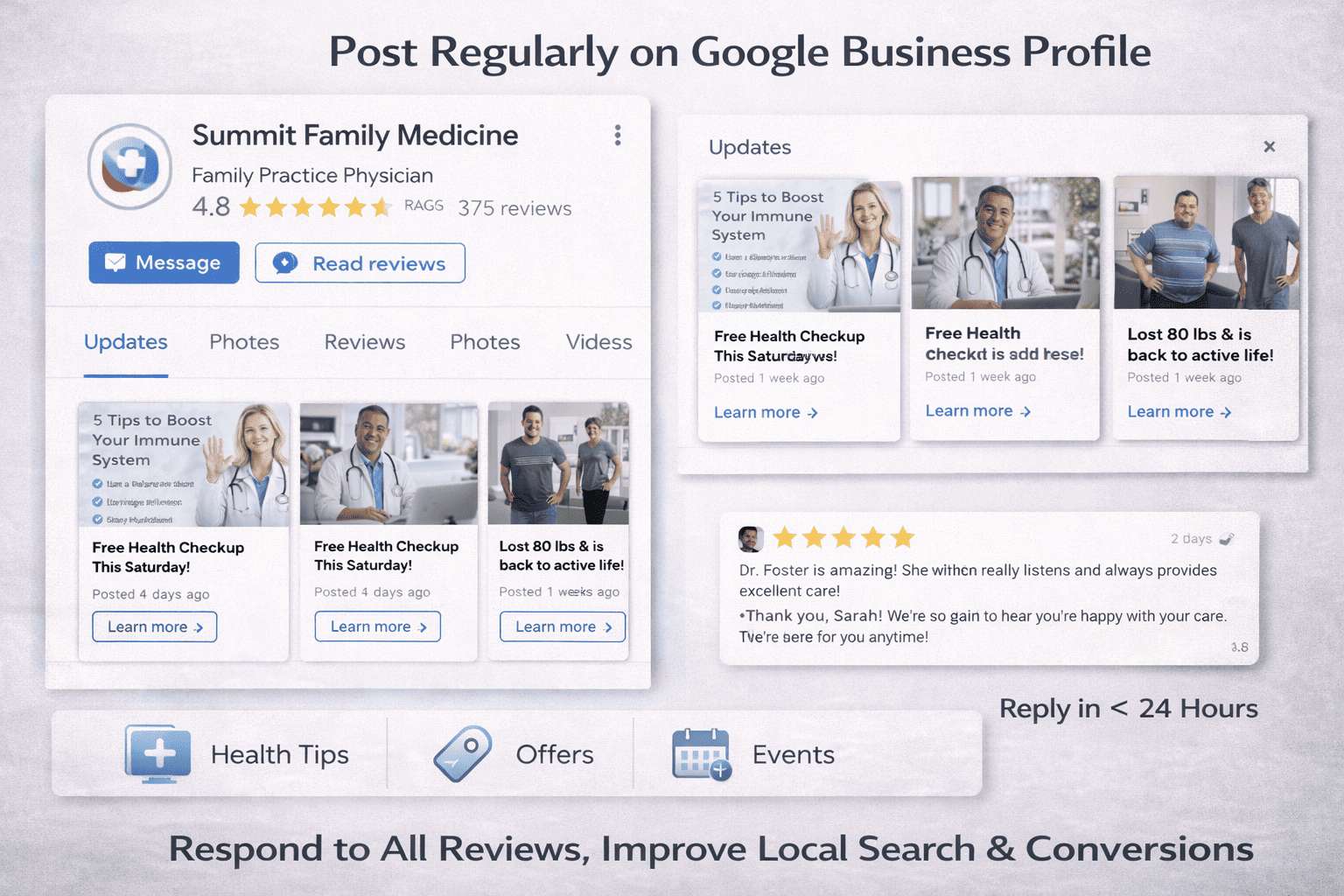
11. Post Regularly on Google Business Profile
Update your Google Business Profile three to five times per week with health tips, offers, events, and compliant before-and-after content. Respond to every review within 24 hours. This activity directly improves local search visibility and patient conversions.
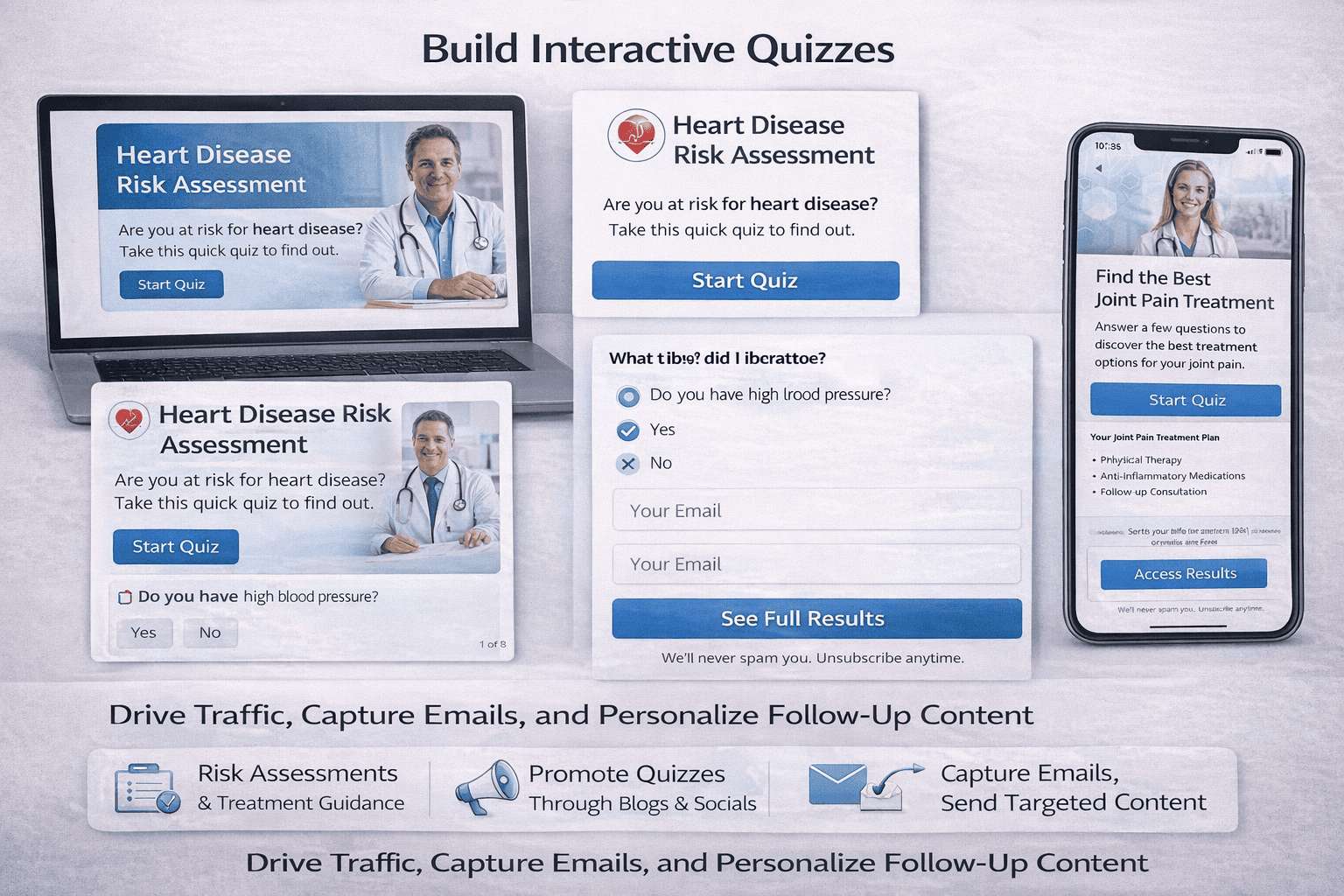
12. Build Interactive Quizzes
Create two to three interactive quizzes using tools like Typeform or Interact. Focus on risk assessments or treatment guidance. Drive traffic through blogs and social posts, capture emails at the results stage, and follow up with personalized content.
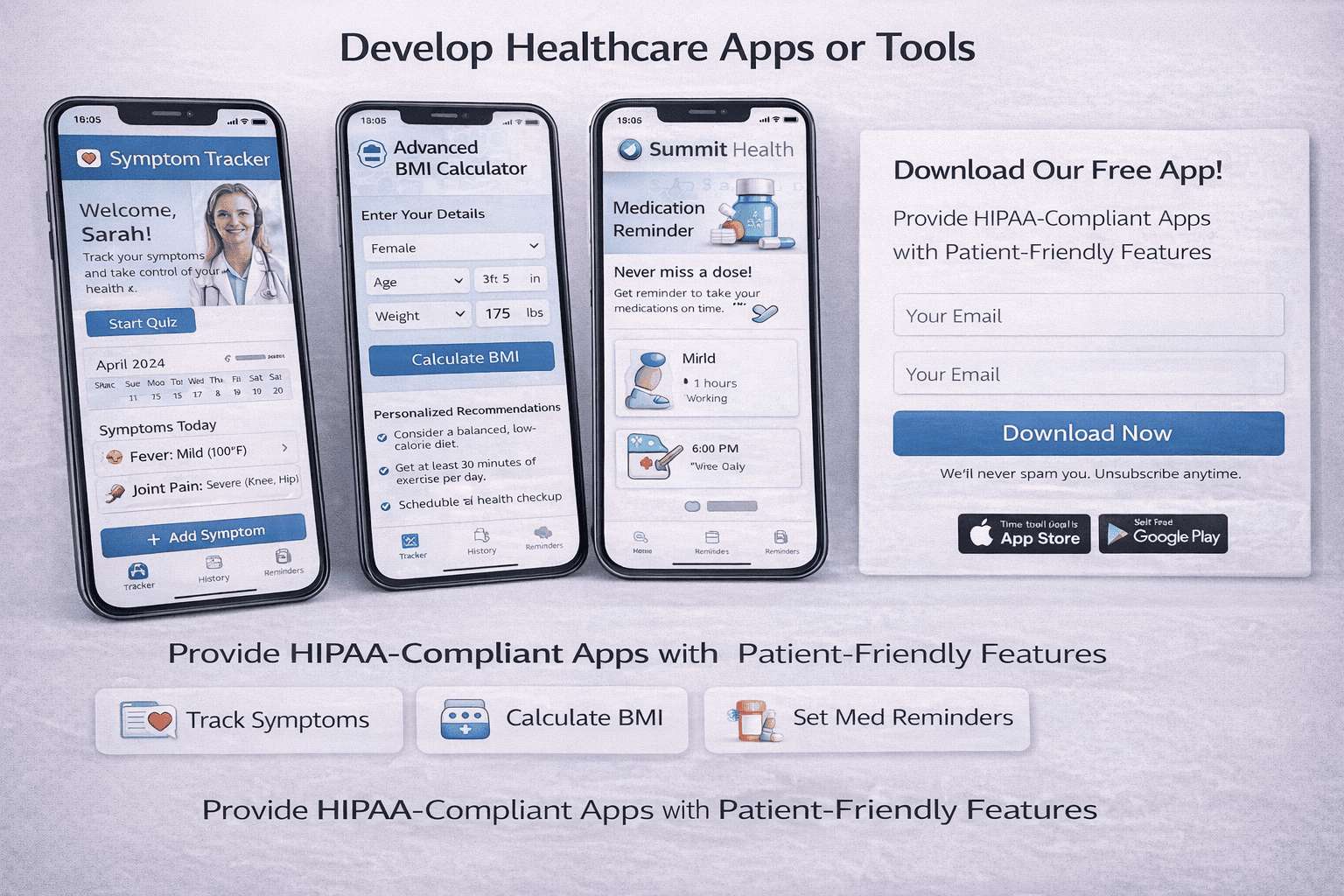
13. Develop Healthcare Apps or Tools
Build or white-label simple HIPAA-compliant digital tools such as symptom trackers, BMI calculators, or medication reminders. Promote them as free patient resources and use consent-based data to personalize future content and engagement.
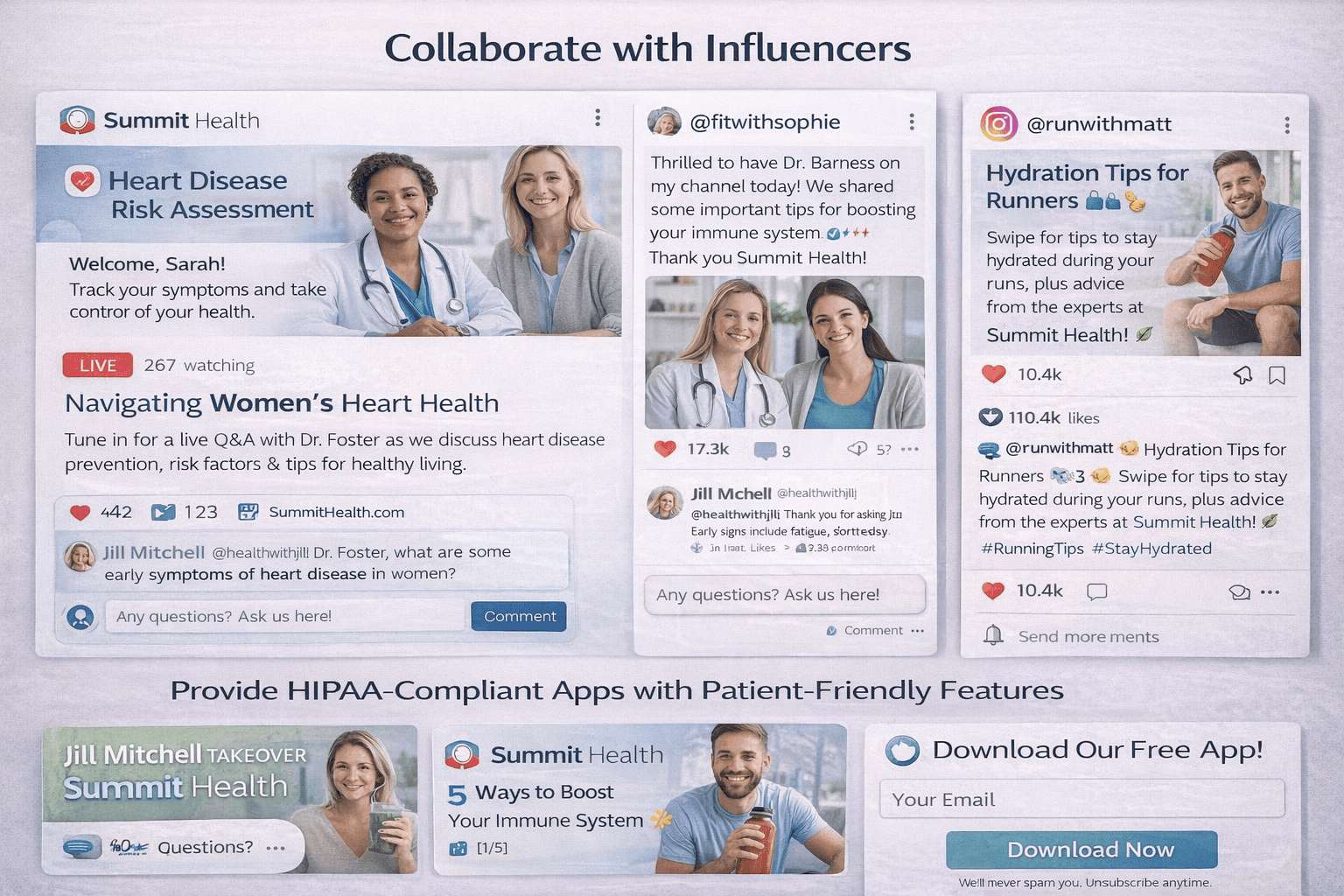
14. Collaborate with Influencers
Partner with healthcare or wellness micro-influencers who have engaged, compliant audiences. Co-create authentic content such as guest appearances, live sessions, or social takeovers to extend reach while maintaining credibility and compliance.
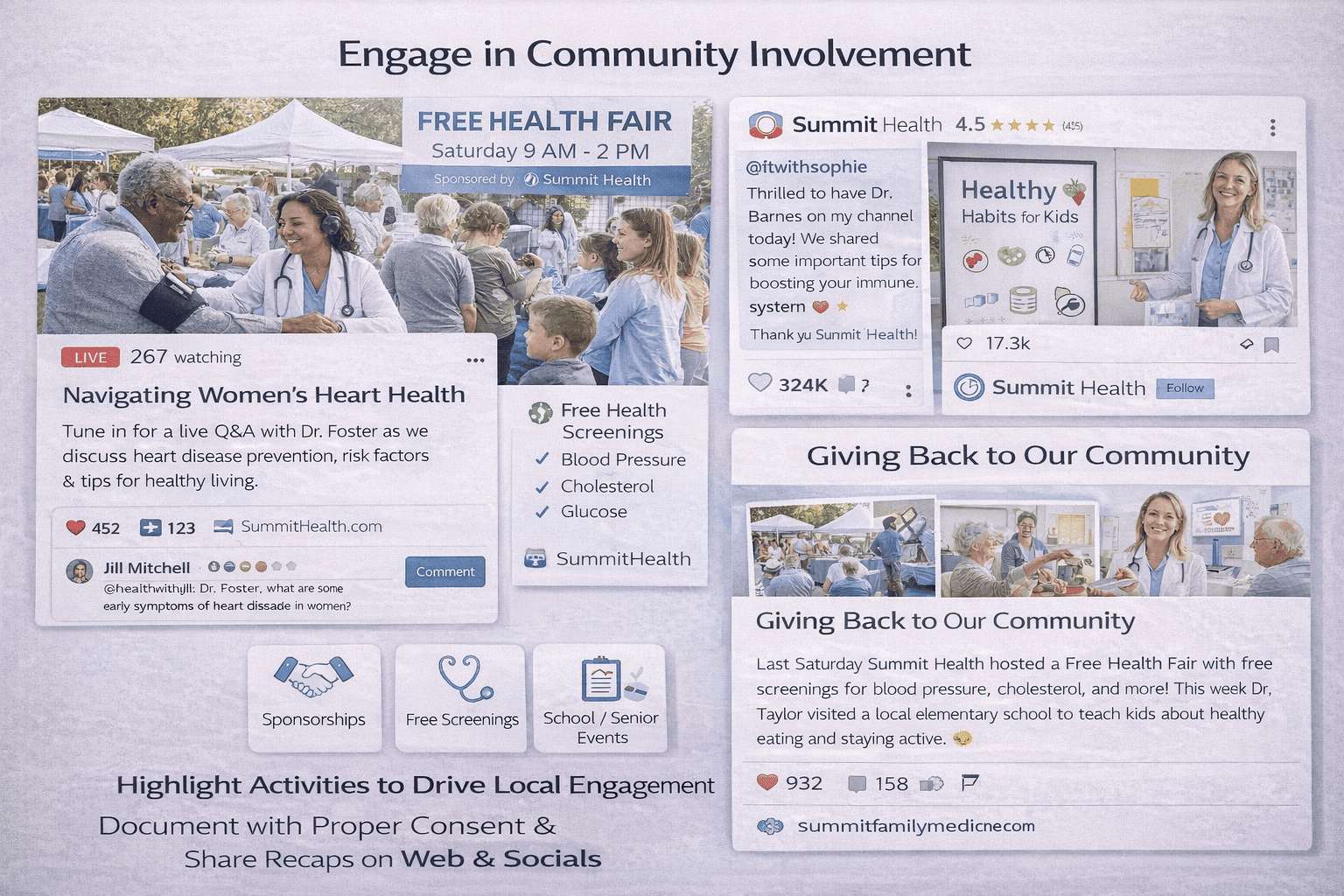
15. Engage in Community Involvement
Maintain consistent community involvement through sponsorships, free screenings, school talks, or senior center events. Document activities with proper consent and publish recaps on your website and social platforms to drive local engagement.
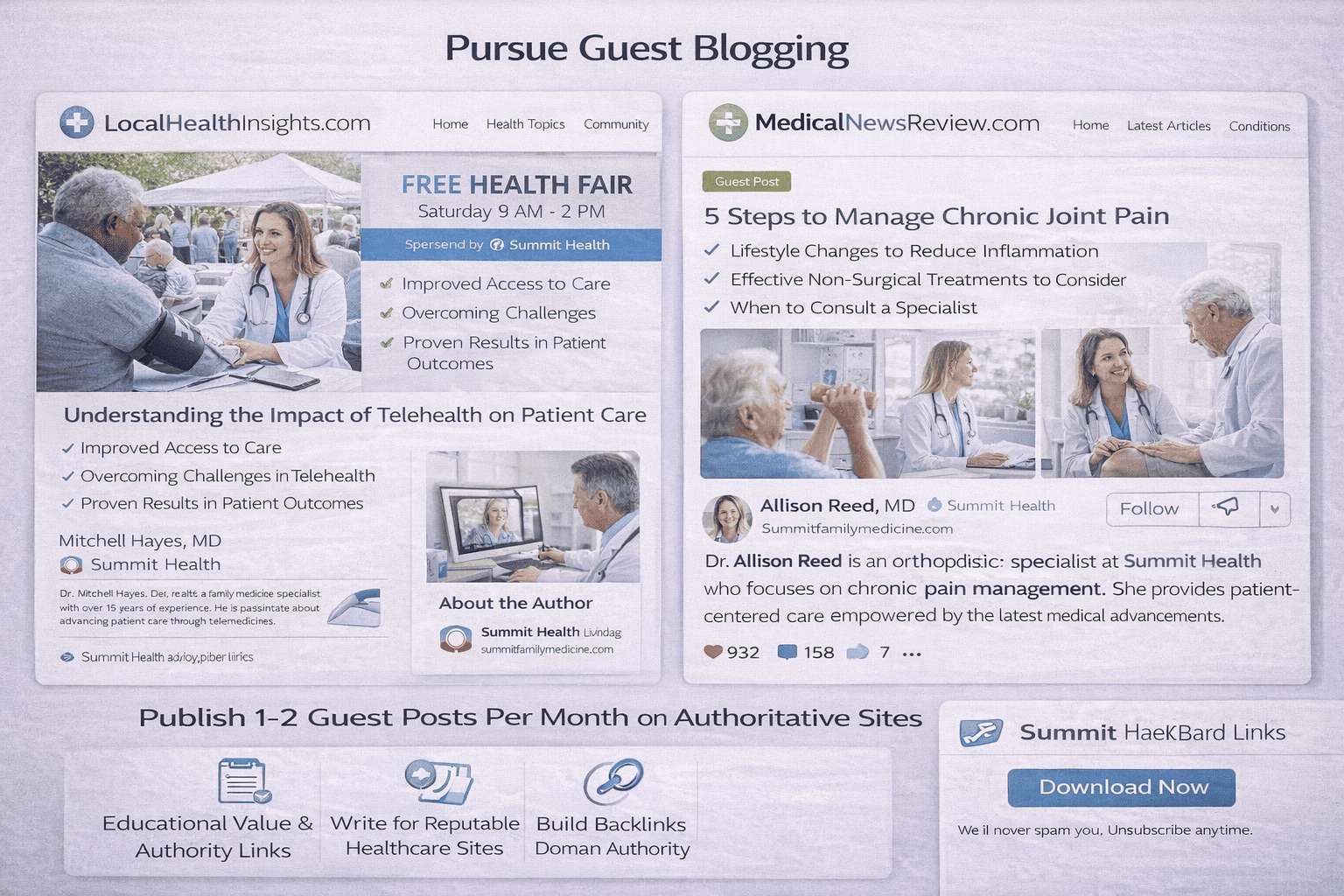
16. Pursue Guest Blogging
Publish one to two guest posts per month on authoritative healthcare sites, local publications, or industry blogs. Focus on educational value and include subtle author bio links to strengthen backlinks and domain authority.
Also Read: Cost to Build a Healthcare
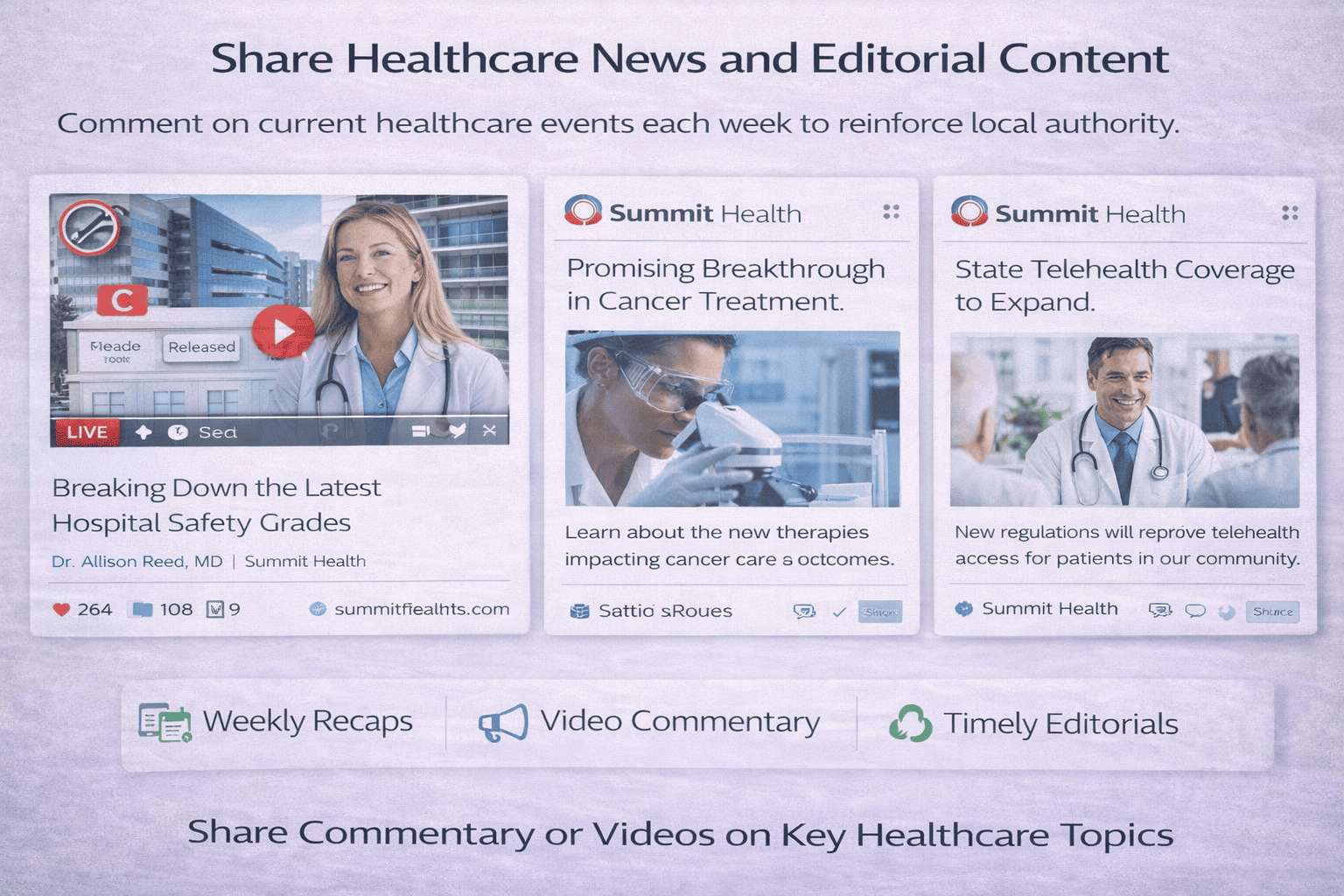
17. Share Healthcare News and Editorial Content
Publish weekly commentary on major healthcare news, new research, or policy updates. Create short editorials or videos quickly to capture timely traffic and reinforce authority as a trusted local healthcare voice.
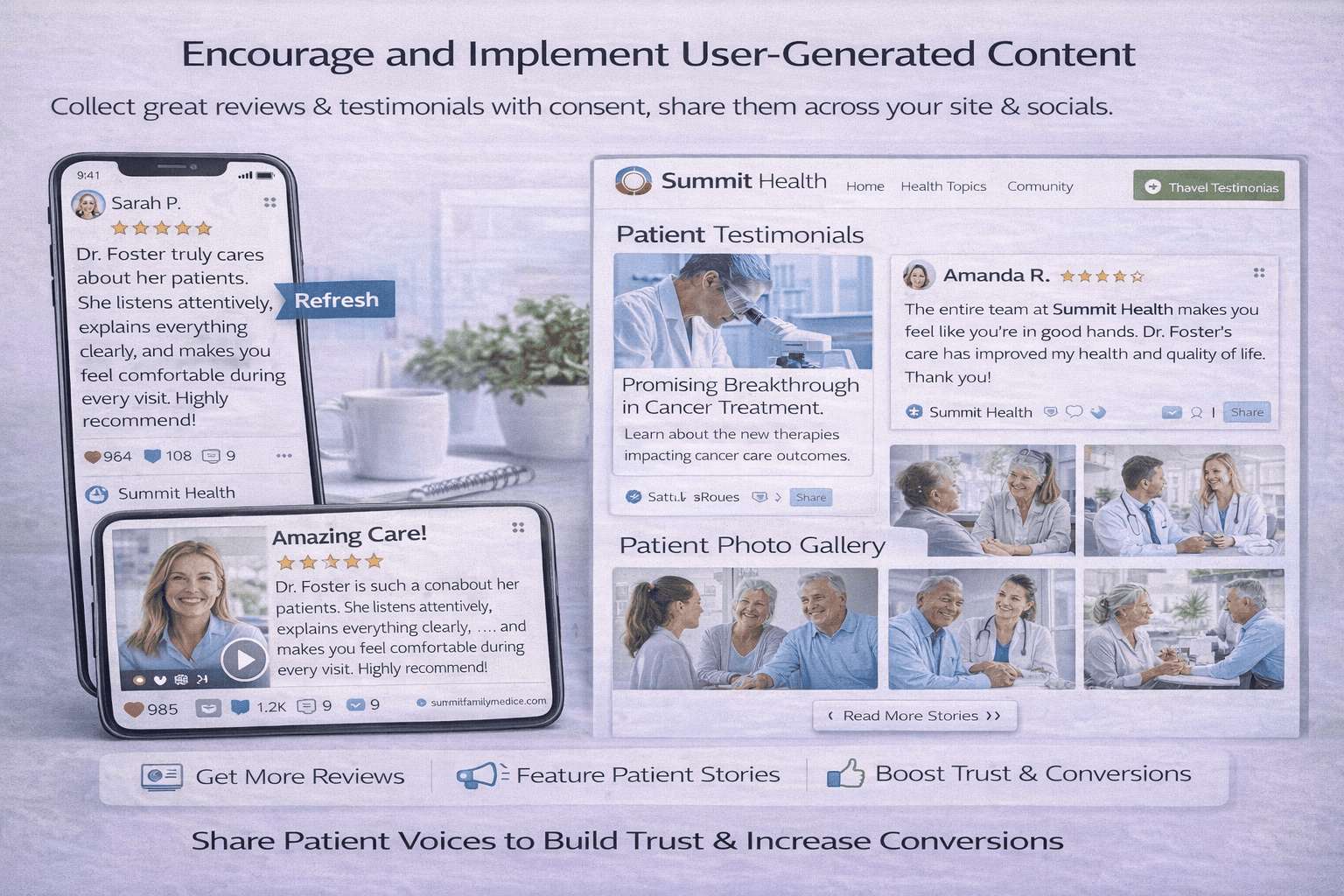
18. Encourage and Implement User-Generated Content
Systematically collect reviews, testimonials, and patient stories with proper consent. Feature this content across your website and social platforms, as authentic patient voices significantly improve trust and conversion rates.
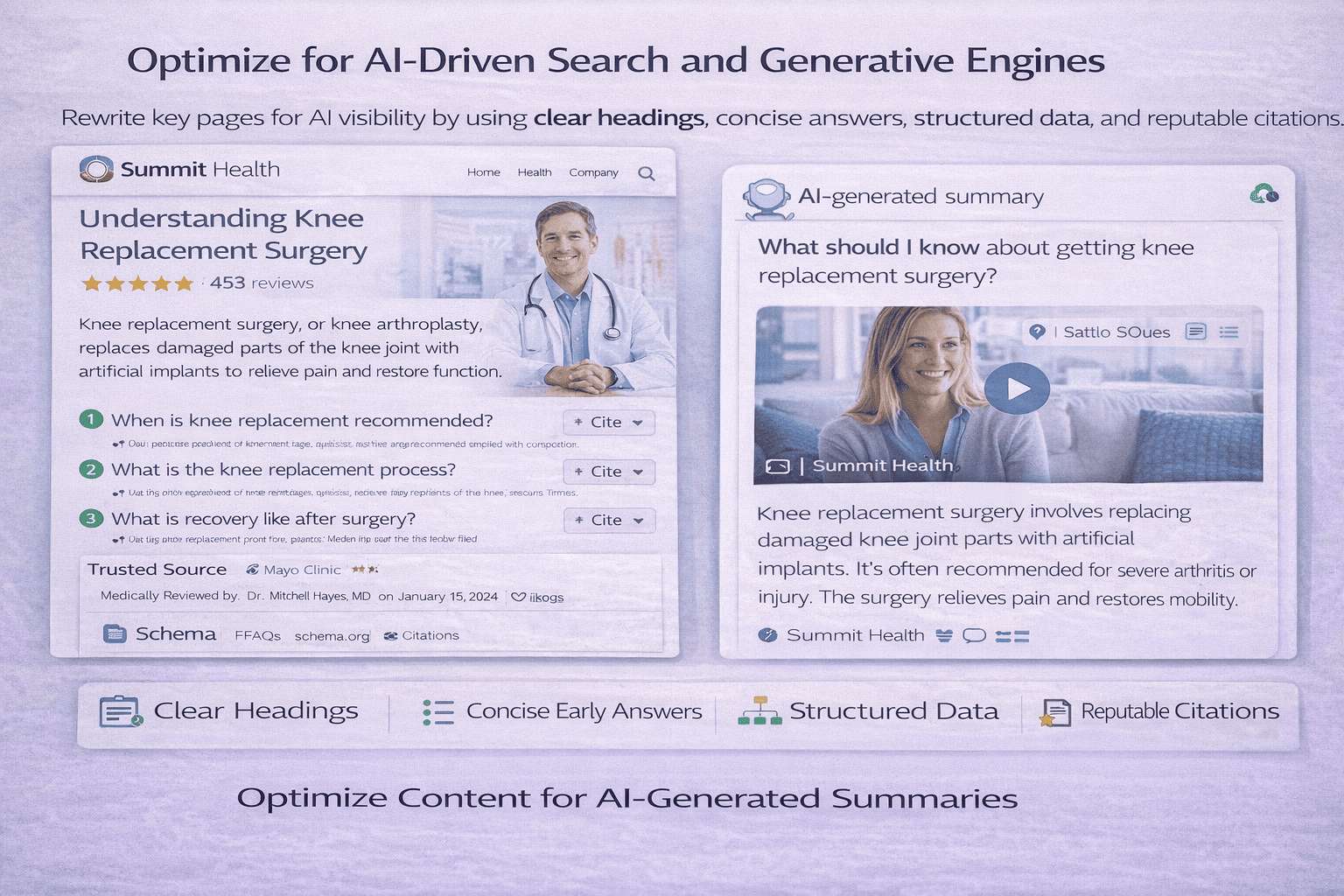
19. Optimize for AI-Driven Search and Generative Engines
Rewrite key pages for AI visibility by using clear headings, direct answers early in content, structured data, and reputable citations. Optimize content to become a primary source for AI-generated summaries.
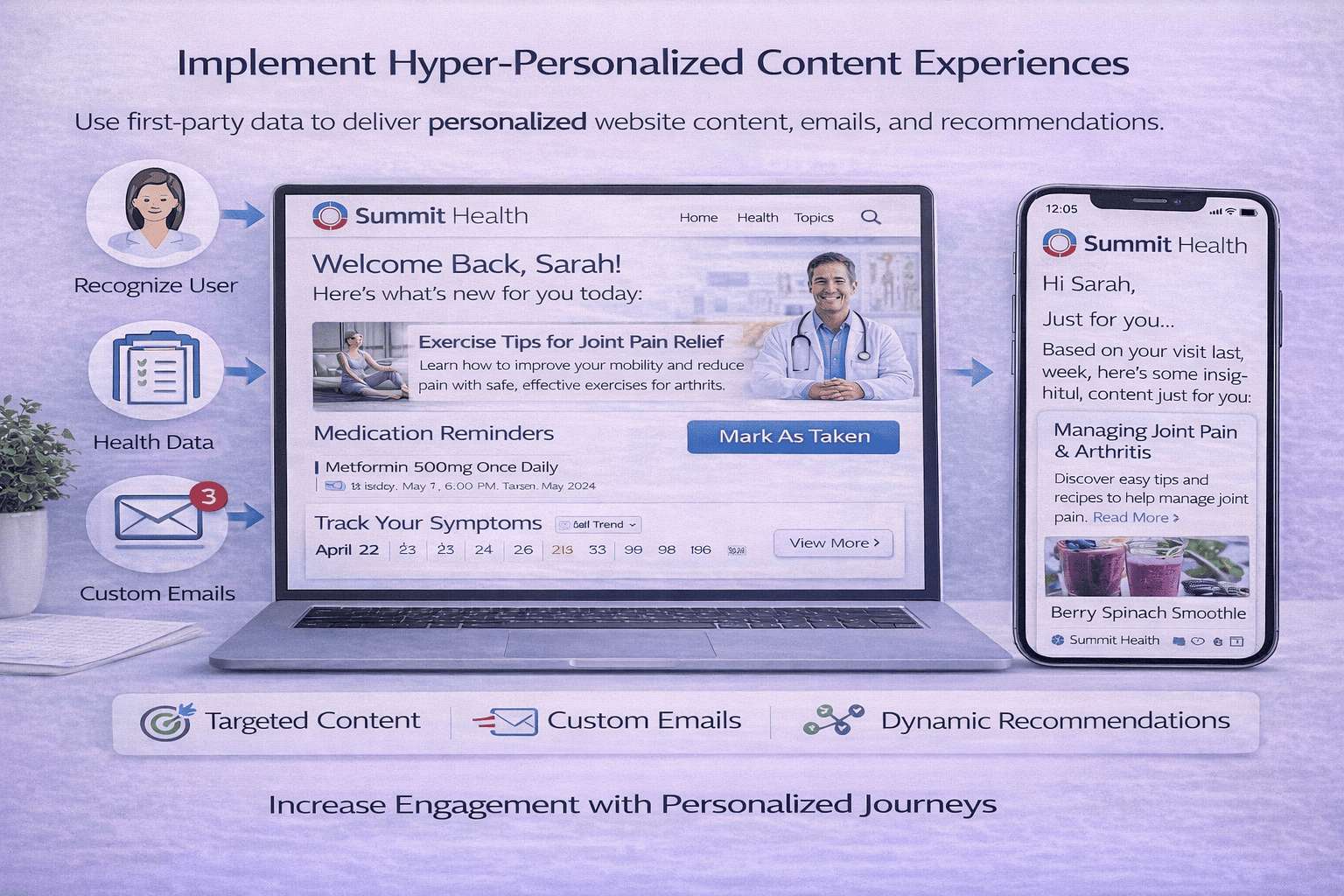
20. Implement Hyper-Personalized Content Experiences
Use first-party data to deliver personalized website content, email journeys, and dynamic recommendations. This approach increases engagement and conversions while remaining compliant in healthcare environments.
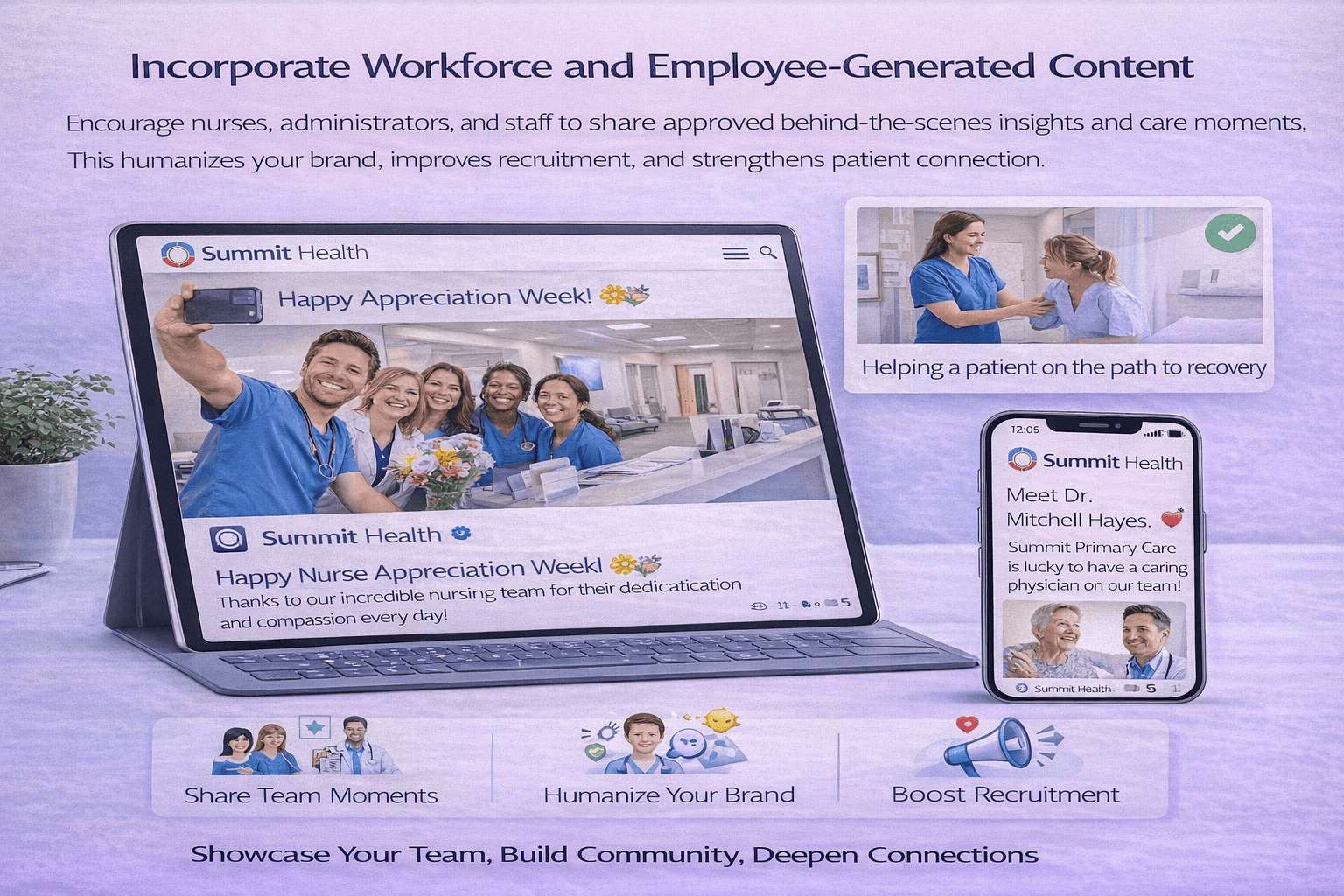
21. Incorporate Workforce and Employee-Generated Content
Encourage nurses, administrators, and staff to share approved behind-the-scenes insights and care moments. This humanizes your brand, improves recruitment, and strengthens patient connection.
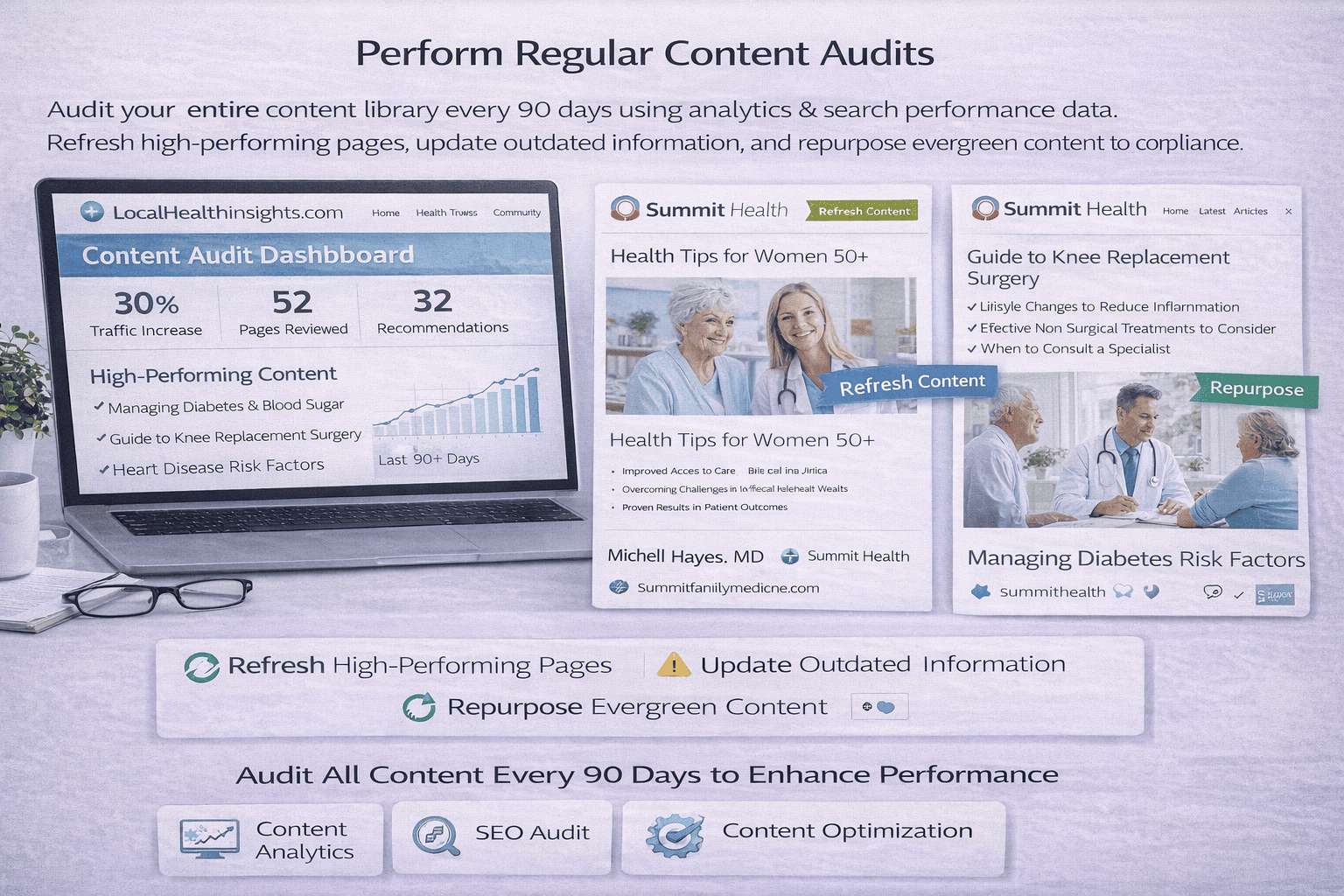
22. Perform Regular Content Audits
Audit your entire content library every 90 days using analytics and search performance data. Refresh high-performing pages, update outdated information, and repurpose evergreen content to maintain rankings and compliance.
Top Content Priorities
| Content Type | Why Prioritize (2026 Impact) |
|---|---|
| Educational, SEO-Focused Articles | #1 driver for organic and AI visibility |
| Video Content | Highest engagement and trust builder |
| Localized Content | Dominates “near me” and local intent searches |
| Google Business Profile Updates & Reviews | Fastest local pack visibility and walk-in conversions |
| Long-Form Resources | Best for lead capture and long-term nurturing |
| Case Studies & Patient Stories | Fastest trust-to-booking converter |
| Physician-Led & AI-Optimized Content | Personal authority plus emerging AI search wins |
Why Do Healthcare Companies Need Content Marketing
Healthcare companies need a strong content marketing strategy because it delivers measurable advantages in a highly competitive and regulated environment. Content marketing establishes clear medical authority through expert-led education, dramatically improves search visibility across traditional and AI-powered results, and educates patients thoroughly before they ever step into a clinic or book a virtual visit.
Trends Shaping Healthcare Content Marketing in 2026
Several dominant trends will define healthcare content performance in 2026. AI-assisted personalization and hyper-targeting now enable practices to deliver the right content at the right moment using compliant first-party data. Short-form video has become the fastest trust-building format, with physician-led clips dominating platforms like Reels and TikTok.
Frequently Asked Questions
What is the purpose of content marketing in healthcare?
The purpose of content marketing in healthcare is to educate patients, build trust, and support informed decision-making using accurate, compliant information. It improves visibility and credibility while guiding patients toward care without direct promotion.
What are the 7 C’s in the healthcare industry?
The 7 C’s in healthcare are Customer (patient), Content, Context, Community, Convenience, Consistency, and Credibility. These principles focus on trust, patient experience, and clear, reliable communication.
What are the 7 P’s in the healthcare industry?
The 7 P’s in healthcare are Product (services), Price, Place, Promotion, People, Process, and Physical Evidence. Together, they define how healthcare services are delivered, perceived, and experienced by patients.
What are the five main types of content marketing goals?
The five main content marketing goals are brand awareness, audience education, engagement, lead generation, and patient retention. Each goal supports a different stage of the patient journey.
What is a healthcare content marketing strategy?
A healthcare content marketing strategy is a structured plan for creating and distributing compliant, patient-focused content. It aligns educational content with business objectives, SEO, and patient needs.
What does a healthcare content marketing agency do?
A healthcare content marketing agency plans, creates, and optimizes compliant content to improve visibility, trust, and patient acquisition. It manages strategy, execution, and performance measurement.
What is content creation for healthcare?
Content creation for healthcare involves producing accurate, regulation-compliant blogs, videos, guides, and digital media for patient education. The focus is on clarity, trust, and medical credibility.
Conclusion
Healthcare content marketing in 2026 is won by practices that lead with physician-led, AI-optimized articles and video, remain 100% compliant, and focus relentlessly on the top-performing content formats. Prioritizing local execution, omnichannel consistency, and real measurement turns content into a predictable patient acquisition engine.