You've invested in your practice, your team, and your clinical expertise. But when a patient searches for a GP, a physio, or a therapist in your area – someone else's name comes up first.
Sound familiar?
Here's the uncomfortable truth: in 2026, the best healthcare provider isn't always the one who gets the patient. It's the one who shows up first, builds trust fastest, and makes booking the easiest.
That's what this guide solves. You'll get 16 digital marketing strategies for healthcare – from SEO and local search to AI search, PPC and compliance – plus a table showing which ones to start with for your type of provider and a five-step method for turning them into a strategy.
What Is Digital Marketing for Healthcare?
In practice, that means a coordinated approach to being found (SEO and local search), being trusted (content, reviews and credentials), and being easy to book (a fast, mobile-friendly website), all while following the rules that apply to healthcare advertising and patient data.
Why Healthcare Marketing Is Completely Different
Healthcare marketing isn't like selling software or trainers. When a patient searches online, they're often anxious, confused, or in pain. They're not browsing – they're looking for someone they can trust with their health, or the health of someone they love.
That changes everything. The tone needs to be calming, not pushy. The information needs to be accurate, not just engaging. The calls-to-action need to feel helpful, not salesy. And the entire digital presence – every page, every post, every ad – needs to signal one thing above all else: you can trust us.
Also Read Why Marketing Is Important in Healthcare →Here are 16 Digital Marketing Strategies
01. Healthcare SEO Strategy
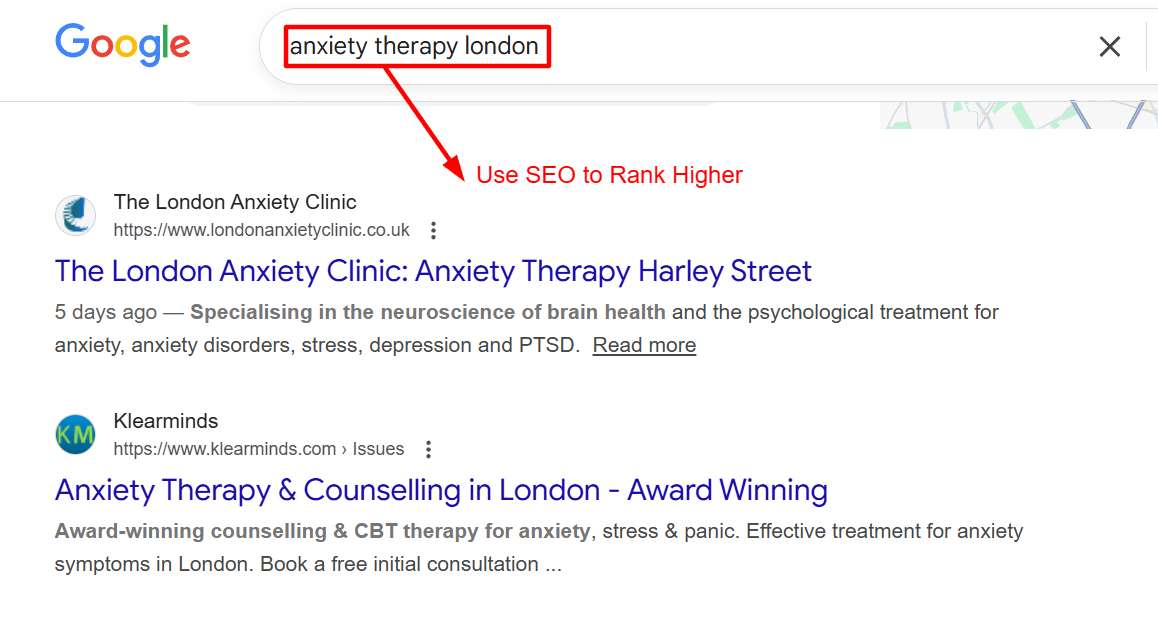
If digital marketing is a house, Healthcare SEO is the foundation. You can run great ads and post brilliant content – but if your website doesn't rank, you're invisible to the many patients who start their healthcare journey on Google.
Health-related content is held to higher standards of accuracy, authority, and trust than most topics – Google's quality guidelines describe this as YMYL (Your Money or Your Life). If your practice publishes health information, that standard applies to you. Keyword stuffing won't cut it. What ranks is content that demonstrates genuine clinical expertise, clear authorship, and verifiable credentials.
The Four Pillars of Healthcare SEO
- Local SEO – Google Business Profile, location pages, local citations. Captures "near me" searches – the highest-intent patient queries.
- On-Page Optimisation – Service pages, schema markup, title tags, meta descriptions. Tells Google exactly what services you offer and who you serve.
- E-E-A-T Signals – Author bios, medical review badges, credentials, citations. Satisfies Google's trust requirements for health content.
- Technical SEO – Site speed, mobile usability, Core Web Vitals, HTTPS. Ensures Google can crawl, index, and rank your content.
Go deeper: SEO for doctors, local SEO for healthcare and keyword research for healthcare.
02. Google AI Overviews: The New Front Page of Healthcare Search
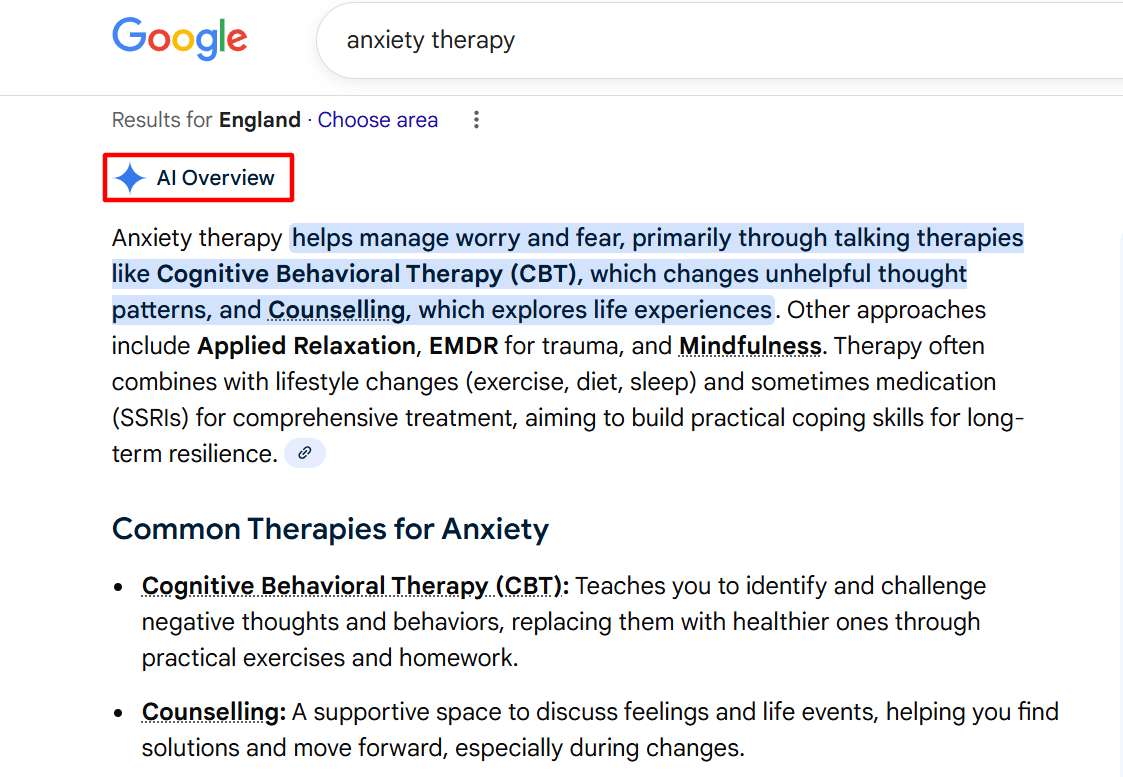
Google's AI Overview now appears at the very top of many search results – above the traditional blue links. For healthcare queries, this is prime real estate. And most practices have no strategy for it whatsoever.
Google's AI scans the web, synthesises information from multiple trusted sources, and surfaces a direct answer to the searcher's query – before they click anything. If your content is one of the sources it pulls from, you can earn a citation and a link, and visibility even if you're not ranking #1 organically.
Structure your content to answer specific patient questions directly and concisely. Use clear H2 and H3 headings that mirror the question format. Back every claim with credible, cited sources. Ensure content is reviewed or authored by qualified clinicians – Google's systems place heavy weight on E-E-A-T signals in the healthcare space.
Go deeper: AI in healthcare marketing.
03. AI Platforms Are the New Search Engines. Is Your Practice in Them?
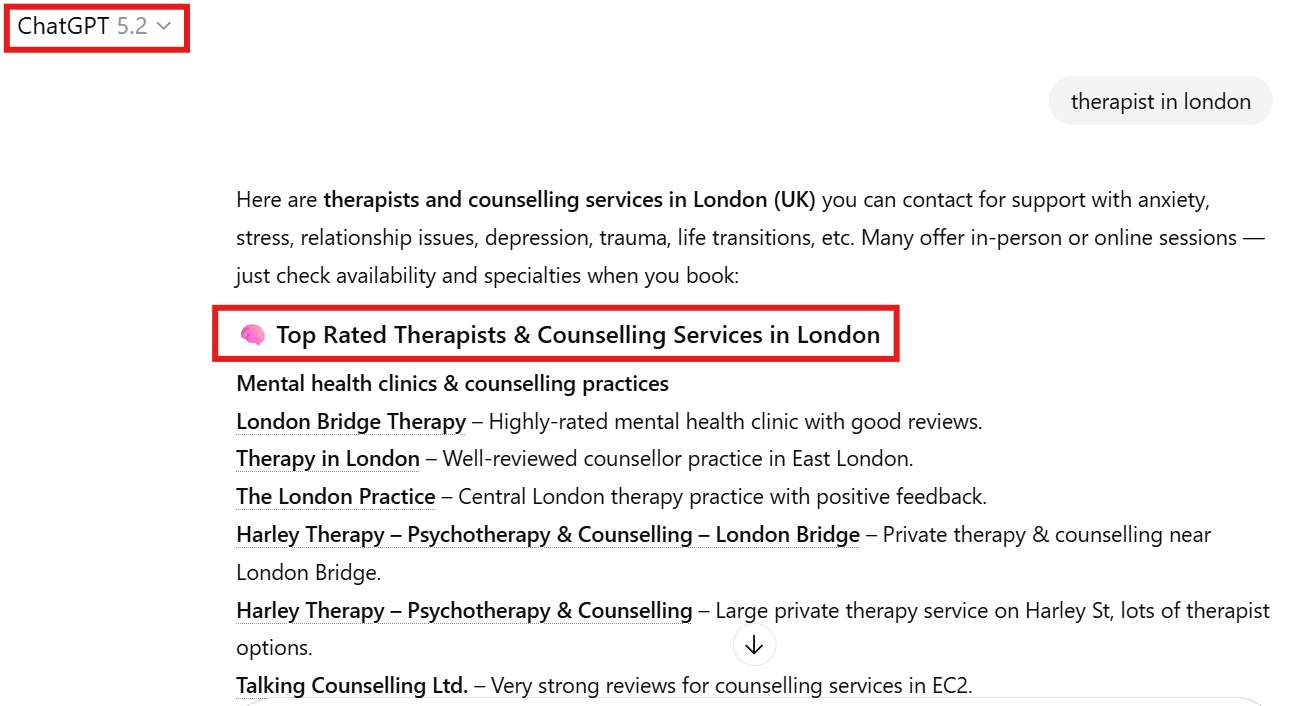
More patients than ever are turning to ChatGPT, Perplexity, Claude, and voice assistants like Siri and Alexa to ask health questions before they speak to a doctor. "What are the symptoms of type 2 diabetes?" "Is anxiety therapy available online in the UK?" These searches used to go to Google. Increasingly, they go to AI.
The question is: does the AI recommend your practice?
Optimising for AI platforms means writing in plain, conversational language that directly addresses common patient questions. It means using consistent terminology across your website, directories, and social profiles. And it means being cited by the authoritative sources – health publications, NHS guidance, NICE guidelines – that AI systems treat as trusted references.
Explore Healthcare Content Marketing Services – Be the Source AI Trusts →04. Becoming the Source AI Systems Actually Trust
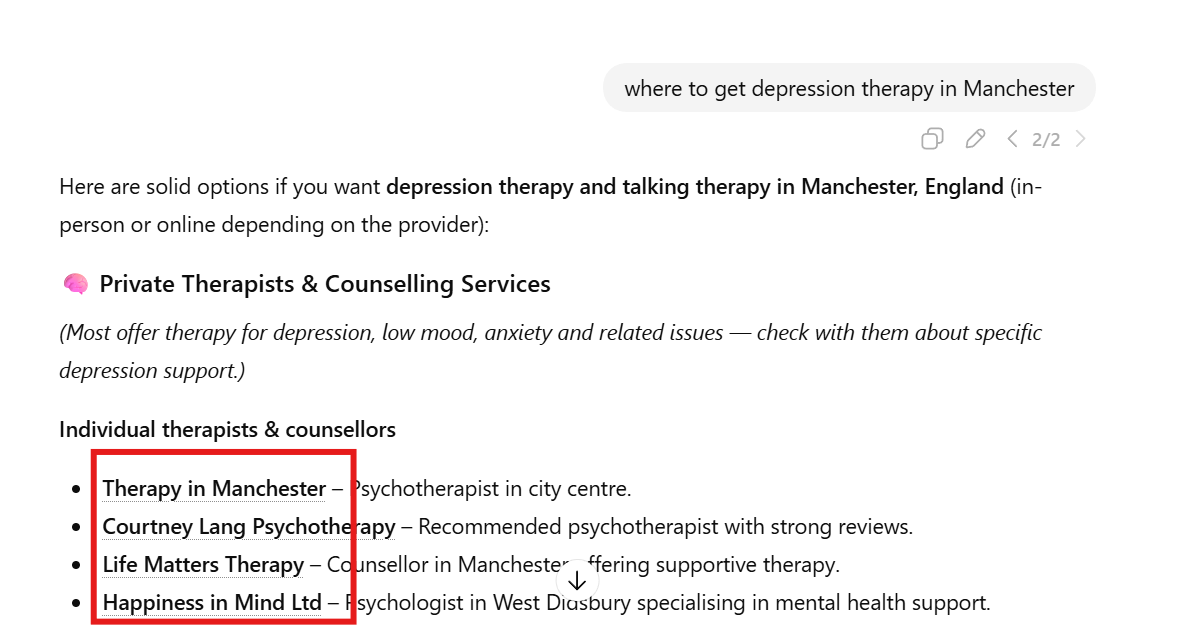
When an AI system generates a health-related answer, it doesn't cite randomly. It favours sources that signal accuracy, transparency, medical review, and consistent credibility over time.
Every piece of content your practice publishes is either building or eroding your authority. Content with clear authorship, visible medical review, accurate sourcing, and transparent methodology is more likely to be cited. Content without those signals is more likely to be ignored – regardless of how well-written it is.
- Authorship – Add qualified author bios to every clinical article – name, credentials, registration number.
- Medical Review – Include "Reviewed by [Clinician Name, Qualification]" on health-related pages.
- Source Citations – Link to NHS, NICE, and peer-reviewed journals when making clinical claims.
- Content Freshness – Add "Last reviewed" dates and update content when guidelines change.
- Consistent NAP – Ensure Name, Address, Phone are identical across all online directories.
05. The Underrated Power of Patient Communities Online
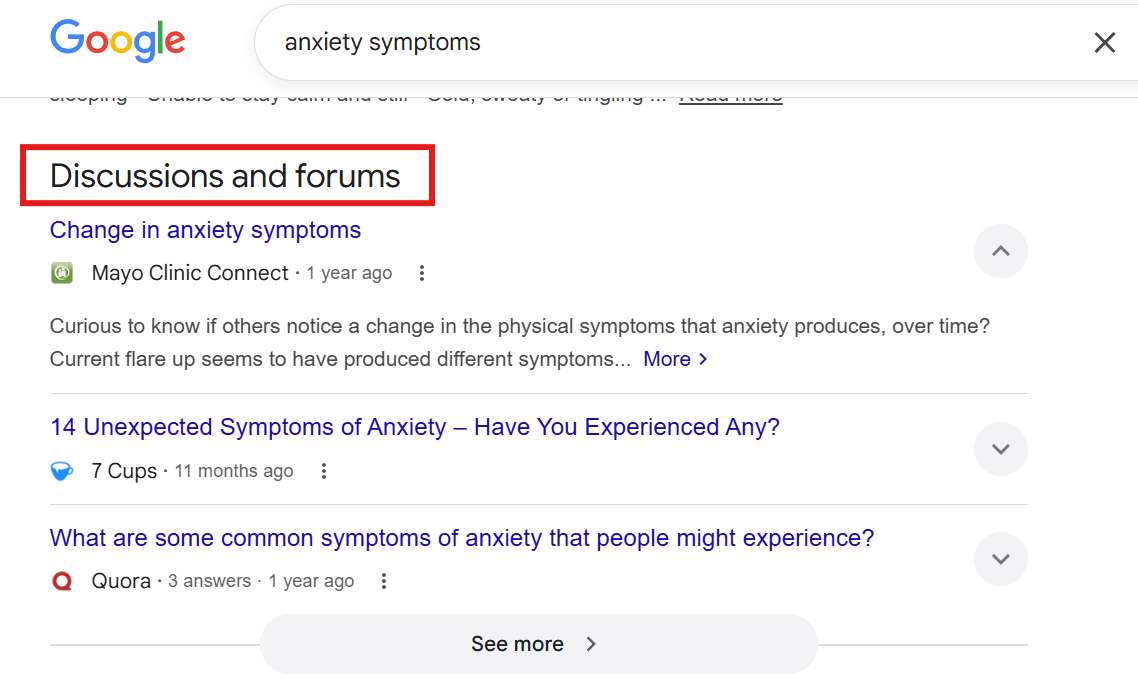
Reddit, Quora, Mumsnet, Health Unlocked, and niche patient forums are where real people share their real health concerns – unfiltered and unmarketed-to.
These conversations reveal the exact language patients use when searching for care, the fears and misconceptions that stop them booking appointments, and the questions your website probably isn't answering. That's a goldmine for content strategy.
Contributing accurate, genuinely helpful answers to patient questions – without pitching your services – builds authority in communities that AI systems index heavily. A well-sourced answer on a high-traffic forum thread can drive organic referrals for years.
06. Content Marketing: How to Educate Patients Into Becoming Yours
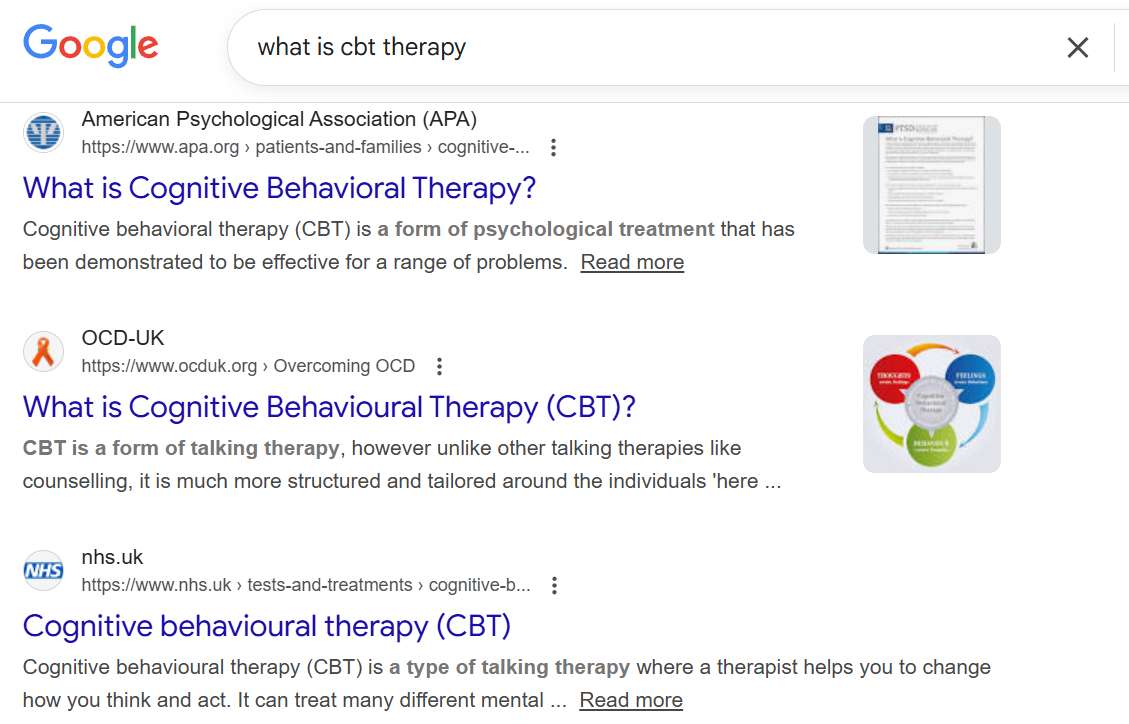
The number one job of healthcare content marketing is this: reduce uncertainty.
A patient considering a procedure is anxious. A carer researching dementia support is overwhelmed. Someone experiencing chest pains for the first time is scared. The content you publish either calms those fears with clear, accurate information – or fails to help and sends them to a competitor who does.
Effective healthcare content answers the real question behind the search query. "Back pain exercises" isn't really about exercises – it's about "I've had this pain for three weeks and I don't know if I should be worried." Content that addresses the underlying anxiety alongside the practical information tends to convert better than content that just ticks keyword boxes.
- Symptom guides & condition explainers – Targets the Awareness stage. Goal: build trust and establish authority.
- Treatment comparisons & FAQs – Targets the Consideration stage. Goal: educate and differentiate.
- Service pages & case studies – Targets the Decision stage. Goal: convert to appointment.
- Post-treatment resources & check-ins – Targets the Retention stage. Goal: increase lifetime patient value.
07. Video: The Fastest Way to Build Trust Before a Patient Walks In
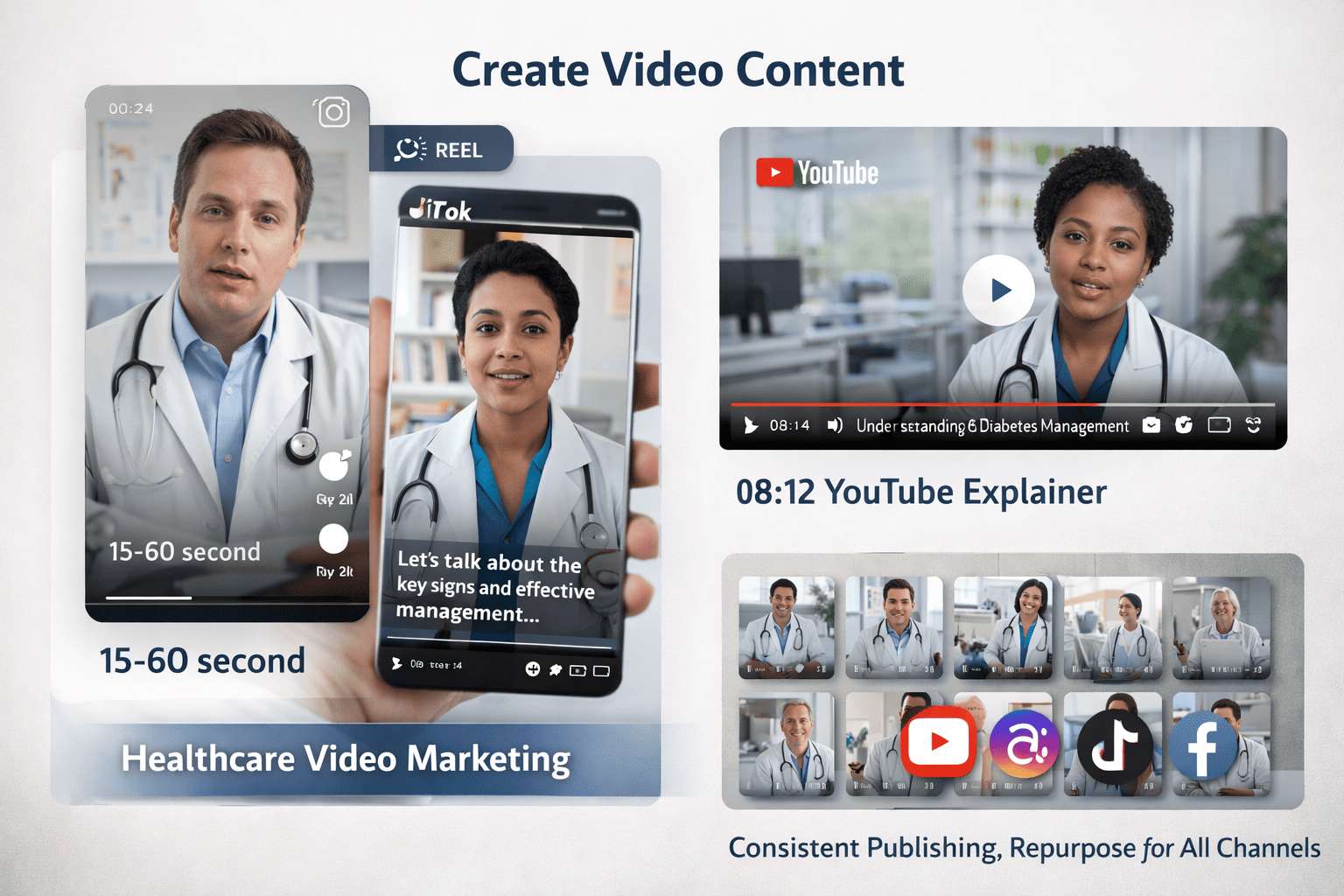
Think about what happens when a patient watches a 90-second video of a surgeon explaining a procedure in plain English, standing in the actual clinic where they'll be treated. The anxiety level drops. The trust level rises. And the likelihood of that patient booking an appointment goes up.
Video does something text simply cannot: it makes the abstract concrete. Patients can see the environment, hear the clinician's voice, and begin to form a relationship before a single appointment is made. Video can also increase time-on-page and support conversion on healthcare service pages.
- Clinician introductions – Brief, warm, and jargon-free. Often among the best-performing healthcare video formats.
- Condition explainers – "What is Type 2 Diabetes and what are your treatment options?" Performs well in search.
- Patient testimonials – With proper consent. Builds peer-level trust that no other format can replicate.
- Facility tours – Reduce first-visit anxiety for nervous patients before they ever arrive.
08. Healthcare PPC: Instant Visibility for High-Intent Patients
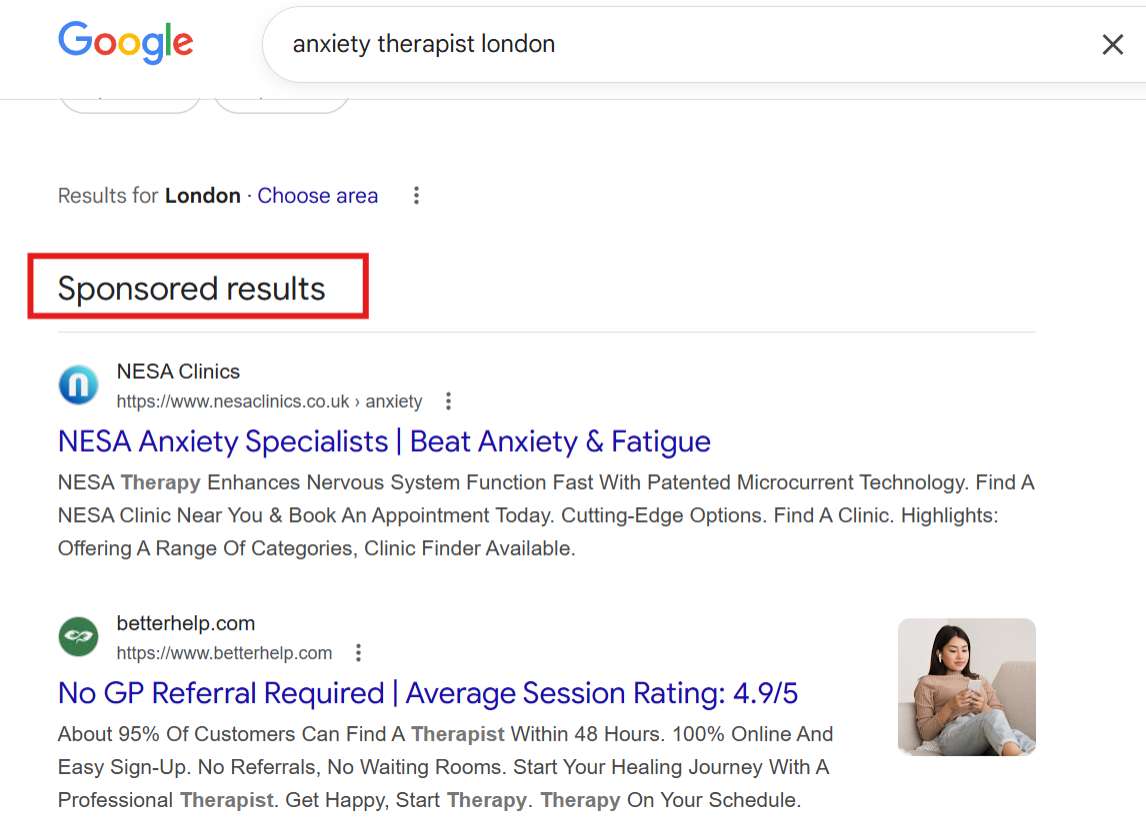
SEO is a long game. It takes months to build momentum. But when you launch a new service – a specialist clinic, a telehealth offering, a private diagnostic service – you often can't wait six months to start seeing patients.
A well-structured Google Ads campaign puts your practice at the top of search results quickly, targeting patients who are actively searching for exactly what you offer – "private ADHD assessment adults," "online CBT therapy," "same-day GP appointment London." These are high-intent searches from people who are ready to book.
- Service-specific keywords with location targeting and negative keyword lists
- Honest, benefits-focused copy compliant with ASA/CAP healthcare rules
- Dedicated landing page matching the ad, clear CTA, fast load time
- Target CPA bidding based on actual cost-per-appointment data
- Broad match keywords that attract irrelevant clicks
- Exaggerated claims, unverified statistics, guaranteed outcomes
- Sending paid traffic to a generic homepage
- Maximise clicks with no conversion tracking in place
Go deeper: healthcare PPC and Google Ads for doctors.
09. Email Marketing: Your Most Underused Patient Retention Tool
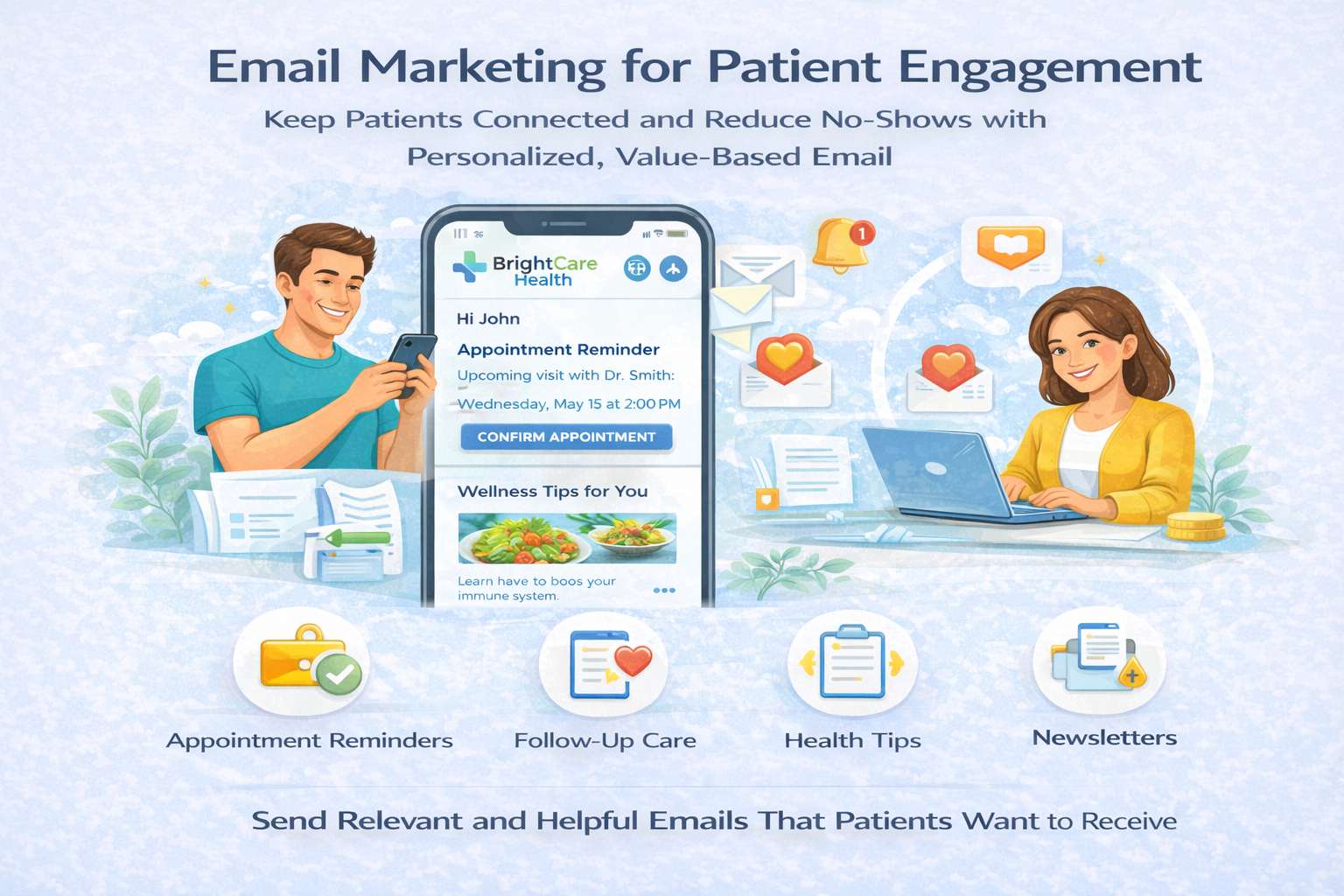
Most healthcare practices spend all their marketing energy attracting new patients. Very few invest in keeping the ones they already have.
A patient who has already experienced your care is more likely to return, refer friends and family, and leave a positive review than a cold prospect who found you through an ad. Email is a cost-effective channel for maintaining those relationships – and for making sure that when a patient needs care again, your practice is the first name they think of.
- Post-appointment follow-ups – Check on patient recovery and invite feedback.
- Seasonal health reminders – Flu vaccination season, annual health checks, cervical screening reminders.
- Condition-specific newsletters – For patients managing chronic conditions.
- Birthday wellness messages – Keep your practice top-of-mind in a way that feels caring, not commercial.
10. Social Media for Healthcare: Trust at Scale

Social media is not a direct patient acquisition channel in the way PPC or SEO is. You're unlikely to get many patients booking appointments because they saw a Facebook post. But that misses the point entirely.
Social media builds the background level of trust that makes every other channel work better. When a patient finds your practice through Google and then checks your Instagram and sees consistent, professional, helpful content – they're more likely to book than if they find nothing. Social proof is trust proof.
- GP / Primary Care – Facebook and Instagram. Health tips, seasonal reminders, team introductions.
- Mental Health / Therapy – Instagram and LinkedIn. Destigmatising content, therapist introductions, mental health awareness.
- Specialist Clinics – LinkedIn and YouTube. Procedure explainers, clinical insights, case studies.
- Life Coaches / Wellness – Instagram and TikTok. Transformation stories, tips, live Q&As.
11. Local Search: Winning Patients in Your Own Postcode
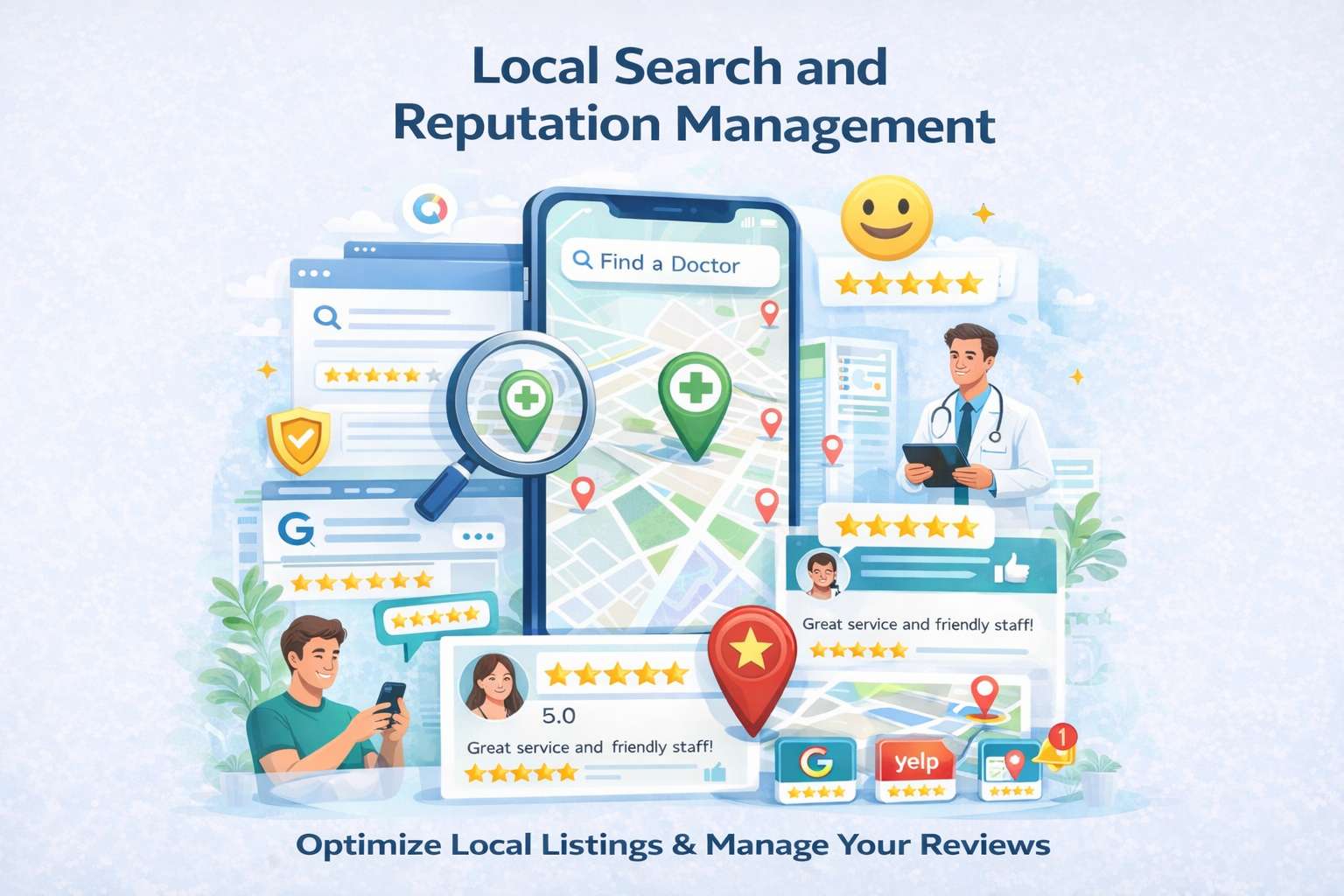
For the vast majority of healthcare providers, the most valuable patients are local. And local search – the Google Maps pack, the "near me" results – is where those patients find you first.
Reviews carry enormous weight. A practice with dozens of recent, positive reviews will often outperform a practice with better clinical outcomes and no reviews, because the patient making a search decision can't see clinical outcomes – they only see what's on screen. Your Google Business Profile is your most visible local asset, and most practices treat it as an afterthought.
- Claim and fully complete your Google Business Profile – including services, hours, photos, and a description with location-specific keywords
- Build consistent listings across the NHS website (nhs.uk), Doctify, Trustpilot, and relevant directories
- Actively request reviews from satisfied patients with a simple, frictionless process
- Respond to every review – positive and negative – professionally and promptly
Go deeper: local SEO for healthcare.
12. Your Website Is Your Most Valuable Marketing Asset. Treat It That Way.
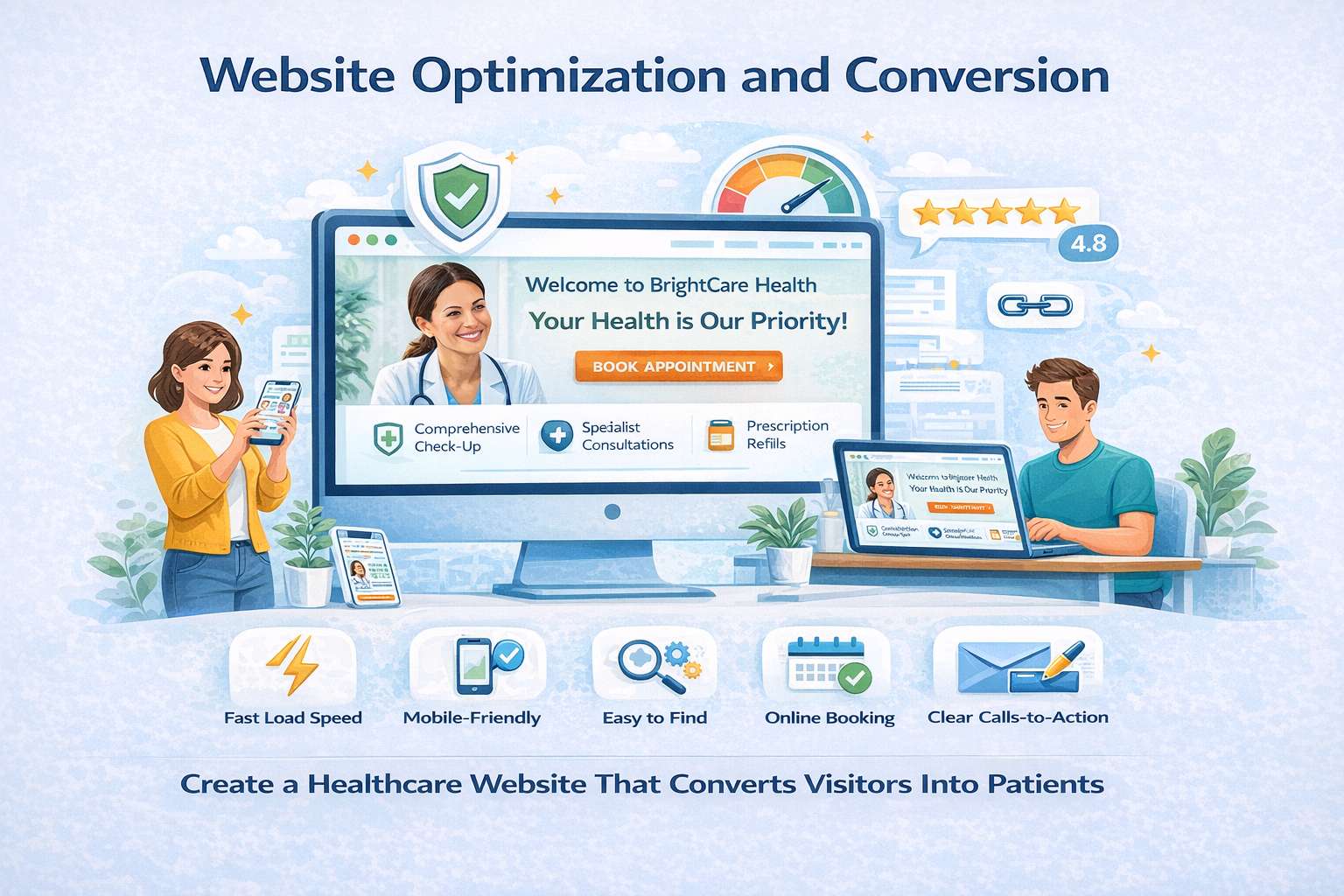
A healthcare website isn't a digital brochure. It is an active, working member of your patient acquisition team – one that never sleeps, never calls in sick, and has the potential to convert visitors into booked appointments around the clock.
Most healthcare websites fail at conversion not because of design, but because of friction. Patients can't find the phone number quickly. The booking process takes too many clicks. The service pages don't answer the specific questions the patient arrived with. Every point of friction is a patient lost to a competitor's simpler website.
- Load Speed – Aim for a Largest Contentful Paint under 2.5 seconds on mobile, which is Google's "good" Core Web Vitals threshold. Slow pages lose visitors.
- Online Booking – 3 clicks or fewer to complete. Reduces friction and after-hours appointment loss.
- Trust Signals – CQC registration, credentials, and reviews visible above the fold. Patients verify trust before they contact.
- Accessibility – Aim for WCAG 2.1 AA. It supports your Equality Act duties and serves elderly and disabled patients.
- Service Pages – Dedicated page per service, per location. Enables both SEO ranking and clear patient information.
Go deeper: how to make a medical website and medical website design cost.
13. Mobile-First Isn't a Feature. It's the Standard.
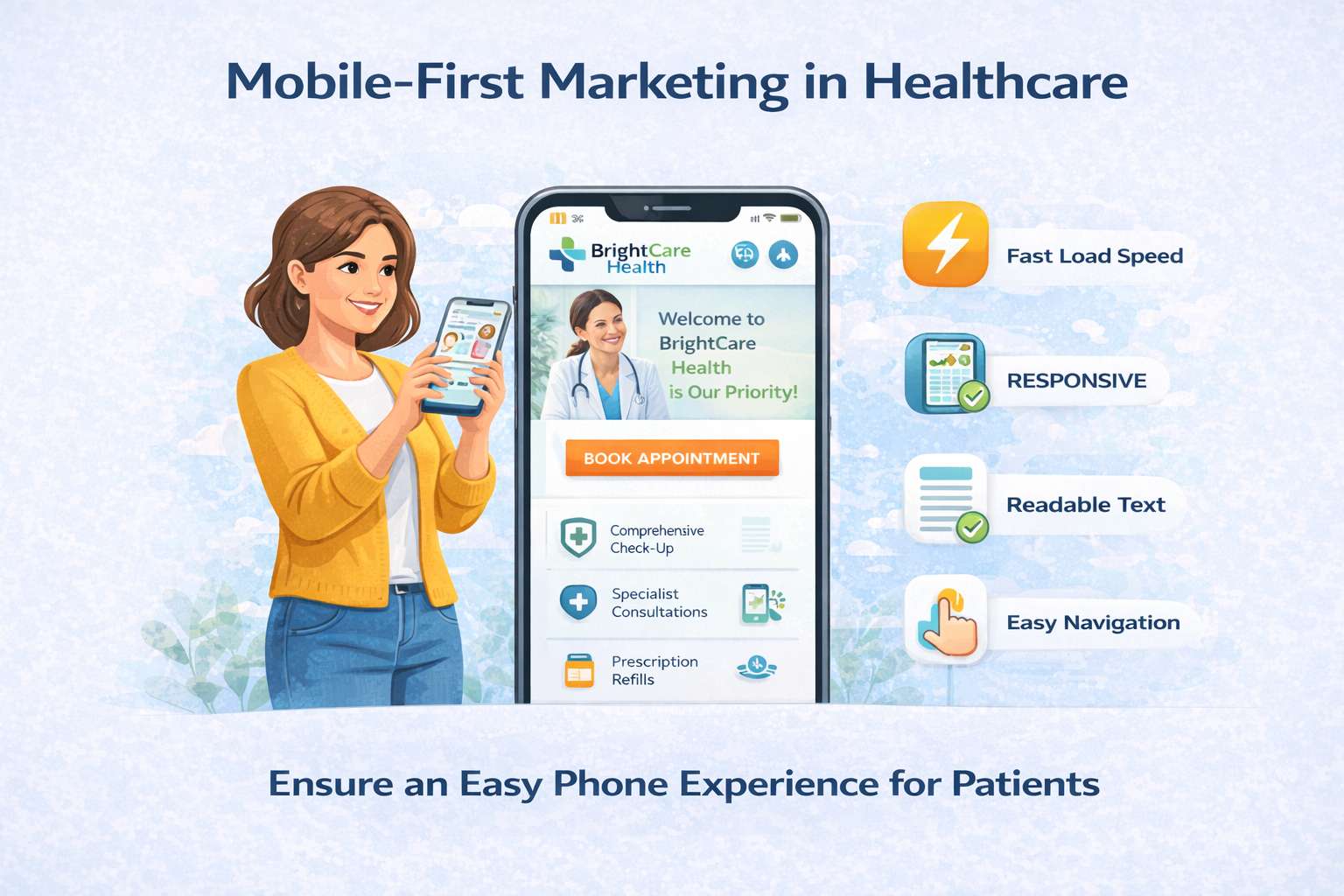
A large share of healthcare searches now happen on a mobile device. Patients search for symptoms while they're waiting. They look up providers while they're on their lunch break. They book appointments from their phones at 11pm when their anxiety about a symptom finally becomes urgent enough to act on.
If your website doesn't work perfectly on mobile, you are losing patients every single day.
Mobile-first means more than responsive design. It means thinking about the mobile experience at every stage of the patient journey: tap targets large enough for a finger, phone numbers that dial on tap, booking forms that don't require pinching and zooming, and page speeds optimised for 4G connections, not just broadband.
14. Healthcare Analytics: Making Smarter Decisions With Less Guesswork
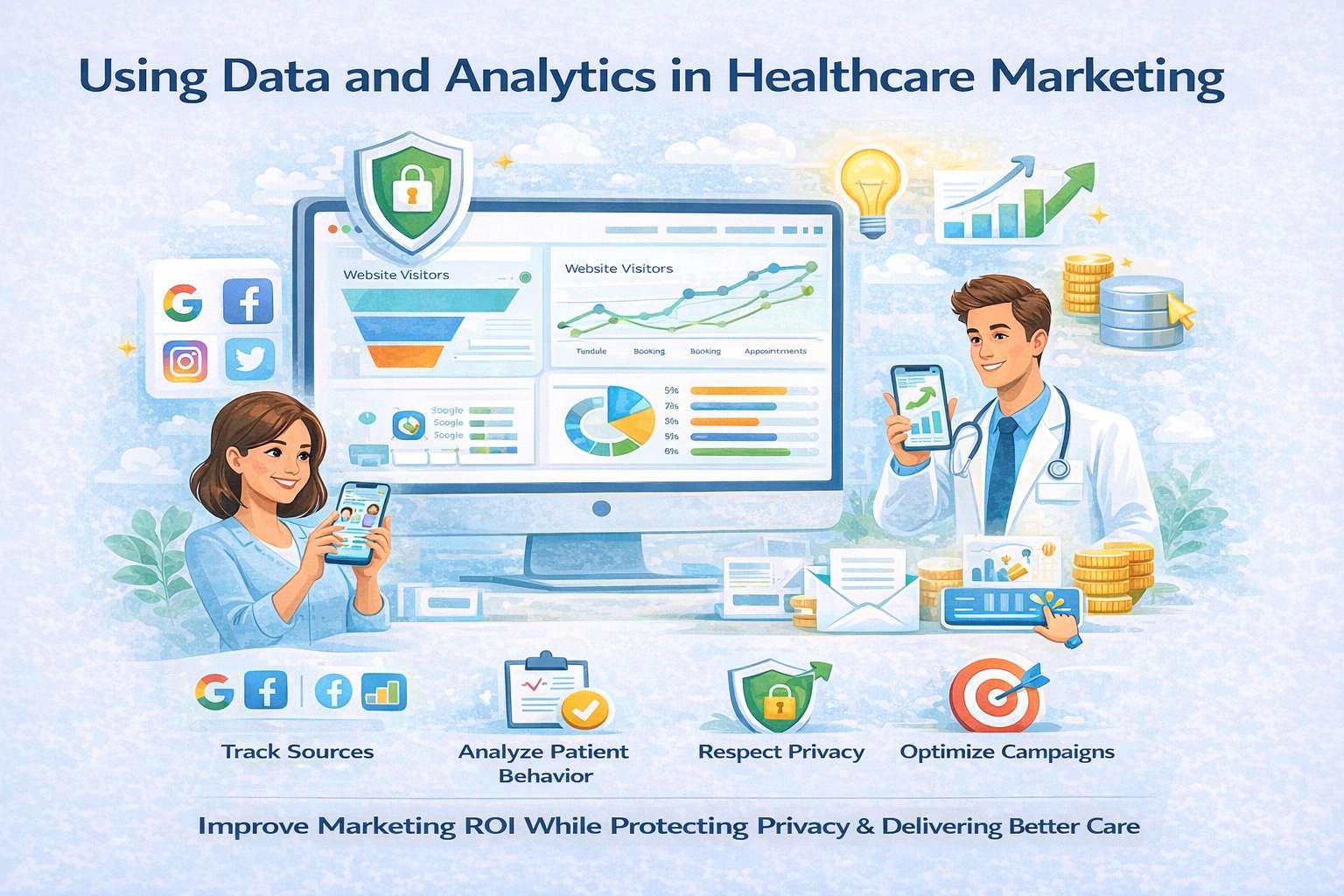
Here's a question most practices can't answer: which of your marketing channels is generating the most booked appointments?
If you don't know, you're allocating budget based on gut feel. And in a field where marketing budgets are finite and the cost-per-patient acquisition matters enormously, that's an expensive habit.
With proper tracking in place – GA4, call tracking, UTM parameters on all campaigns, conversion events for form completions and booking confirmations – you get a clear picture of exactly which pages, campaigns, and channels are driving real-world appointments. You can double down on what works, cut what doesn't, and continuously improve your patient acquisition cost.
15. You're Not Marketing to "Patients." You're Marketing to People.
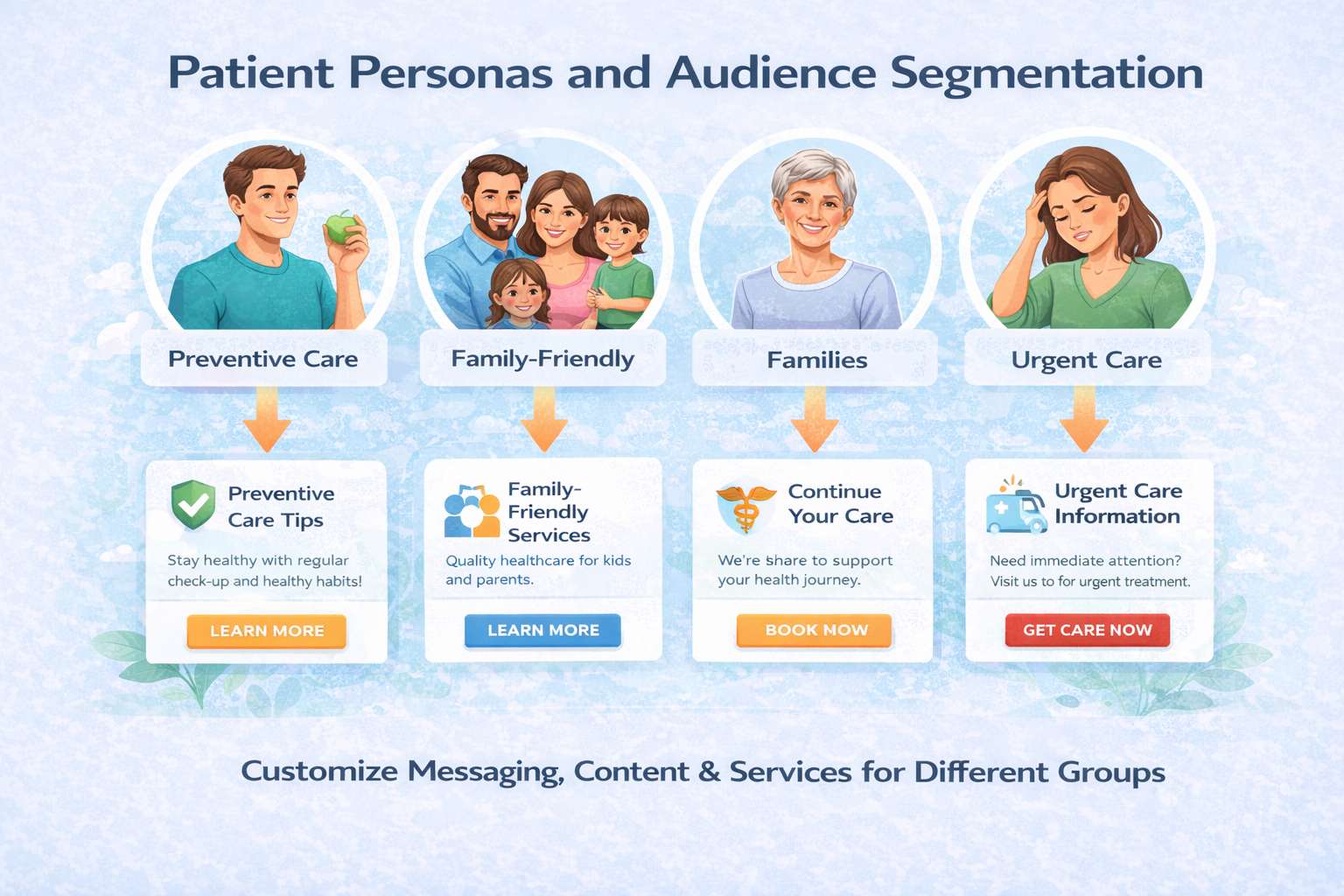
A 28-year-old experiencing anxiety for the first time needs entirely different content and messaging than a 65-year-old managing a chronic condition. A parent searching for paediatric services has different concerns than a professional seeking occupational health support.
Generic messaging speaks to no one. Specific, persona-driven messaging – content that reflects the exact language, concerns, and context of a specific patient type – tends to convert better at every stage of the funnel.
- Start with your actual patient data – what are the most common conditions you treat?
- What's the age and demographic profile of your current patients?
- What questions do patients most commonly ask at their first appointment?
- What almost stopped them from booking?
- Interview five to ten patients directly – the insights are invaluable and almost impossible to replicate with assumptions alone
16. Compliance Isn't a Constraint. It's a Competitive Advantage.
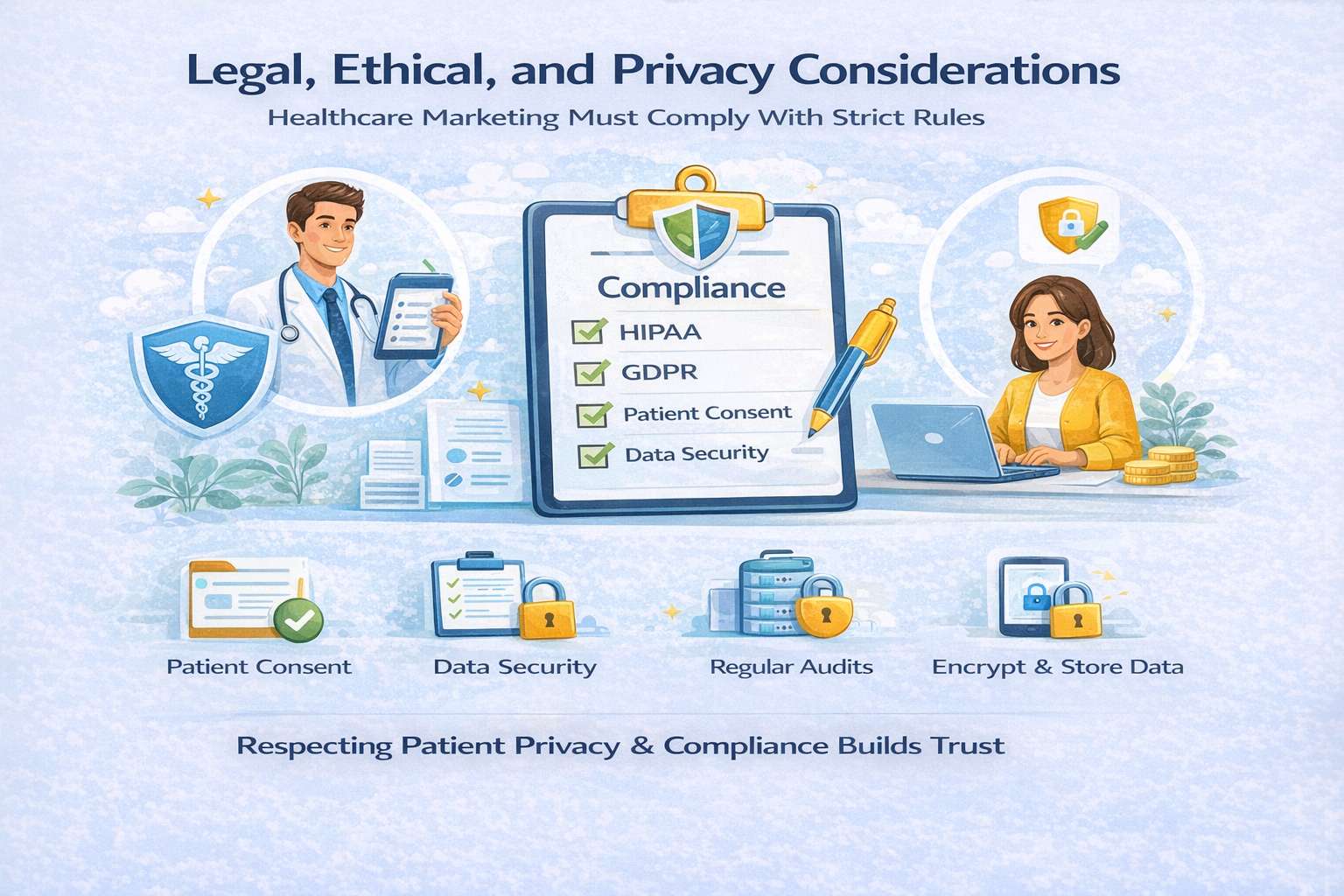
Healthcare marketing operates within one of the most tightly regulated environments in advertising. UK GDPR, ASA and CAP codes for healthcare advertising, GMC guidelines on doctor promotion, CQC standards – and, if you market in the US, HIPAA – the list is substantial.
Practices that treat compliance as an afterthought spend time and money dealing with complaints, regulatory investigations, and reputational damage. Practices that build compliance into their marketing from the start use it as proof of trustworthiness – explicitly communicating to patients that their data is safe, their privacy is respected, and the information they receive meets the highest professional standards.
In a market where patients are increasingly privacy-conscious and sceptical of health information online, being demonstrably compliant and transparent is genuinely differentiating. It's not just the right thing to do – it's good marketing.
UK: UK GDPR and PECR govern how you collect data and send marketing emails, and health data is special category data. The ASA/CAP codes prohibit misleading health claims and guarantees of outcomes. GMC guidance covers how doctors promote their services. CQC-registered providers should keep their advertising consistent with their registration.
US: HIPAA restricts how protected health information can be used in marketing and often requires patient authorisation.
Rules change and depend on your situation, so always work with a compliance-aware healthcare marketing specialist.
Which Digital Marketing Strategies Fit Your Type of Provider?
The 16 strategies above don't carry equal weight for every provider. Use this table to decide where to start. The numbers refer to the strategy numbers in this guide.
| Provider type | Start with | Add next | Watch out for |
|---|---|---|---|
| Private practice or solo practitioner Marketing a private practice |
Local SEO and Google Business Profile (11), website conversion (12) | Reviews, email recall (09) | Spending on ads before the website converts |
| Clinic or multi-site group | SEO and location pages (01, 11), PPC for new services (08) | Content by service line (06), analytics (14) | Thin or duplicated location pages |
| Hospital or large provider | Technical SEO and service-line content (01, 06), analytics (14) | Reputation and review management (11), video (07) | Slow approvals – build compliance sign-off into the workflow |
| Mental health, therapy and counselling Getting more therapy clients |
Content and trust signals (04, 06) | Social media (10), email (09) | Outcome claims; tracking that captures sensitive data |
| Startup or new service | PPC (08), website (12) | SEO (01) for long-term growth | Sending paid traffic to a generic homepage |
Marketing a medical device or health technology product instead? That is a different audience and a different playbook – see medical device marketing. For real-world ideas, see these healthcare marketing examples.
Need help? Talk to us about our healthcare marketing services →How to Build a Healthcare Digital Marketing Strategy in 5 Steps
Reading through the 16 strategies, each makes sense on its own. The skill is choosing and sequencing them. Here is a simple method for turning them into a plan.
- Set one measurable goal. For example, new-patient enquiries per month for a named service, not "more traffic".
- Define who you are trying to reach. Start from your own patient data (see strategy 15).
- Fix the foundation first. A fast, mobile-friendly website, a complete Google Business Profile and working tracking (strategies 11, 12 and 14).
- Choose two or three channels, not sixteen. Pick those that suit your provider type and budget, using the table above.
- Measure monthly and adjust. Track cost per enquiry and booked appointments, not just clicks.
No single strategy works in isolation. SEO and PPC generate visibility, your website converts it into appointments, content and social media build the trust that makes conversion possible, analytics shows what is working, email retains the patients you've won, and compliance underpins all of it. The practices seeing the strongest digital growth are the ones with a coherent system, not 16 disconnected tactics.
Explore Full-Service Healthcare Digital Marketing Services →Frequently Asked Questions
Digital marketing for healthcare isn't about clever tactics or viral content. It's about being reliably visible, genuinely helpful, and deeply trustworthy – at every point in the patient journey, across every channel where patients are looking for care.
The 16 strategies in this guide aren't a checklist to complete once. They're an ongoing system to build, measure, and improve. The practices growing fastest aren't the ones with the biggest budgets – they're the ones with the most coherent, patient-first digital strategy.